Beagle: the Dog That Will Outsmart You and Then Embrace You

Author

He looks at you—large, hazel eyes filled with unfeigned curiosity and a kind of innocent cunning. His long, velvety ears seem to capture not only sounds, but also your discreet thoughts about the treat hidden in your pocket.
The Beagle is not merely a dog. He is a living paradox wrapped in a canine coat. A hunter who would gladly lick his quarry to death. A genius of scent who can get lost among three trees, carried away by an intriguing trail. A never-ending source of energy, capable of curling up like a cinnamon roll and sleeping half the day on your pillow. He is the sort of dog who stepped straight out of history with the sole intention of conquering your sofa.
Why has this small hound with an aristocratic British passport become a universal favorite, a cartoon celebrity, and a customs officer? The answer is simple: the Beagle is a master class in the art of living. He has never read treatises on psychology, but knows how to melt any heart with a single glance. He has no aspirations to leadership, yet his stubbornness can bring a veteran dog trainer to the brink of despair. The Beagle is chaos incarnate with a white-tipped tail—and the world would be far duller without him.
From the Knights of the Round Table to Soviet Apartment Sofas: the Hound in Miniature
The history of the Beagle is not a dry manual on cynology, but an adventure novel with detective elements. His origins fade somewhere between the ancient Greek hunting treatises of Xenophon and the legends of King Arthur’s knights. Some say the Beagle’s ancestors might have taken part in the search for the Holy Grail. The modern Beagle, by contrast, is more likely to search for a cookie lost under the sofa—but the spirit of exploration remains indomitable.
In England his fate once hung by a thread. During the Victorian era, fox-hunting with large hounds became a gentlemen’s sport, and the small “rabbit hounds” began to fall out of favor. The Beagle was on the verge of extinction. He was saved not by aristocrats, but by plain farmers who valued not show-ring aesthetics, but phenomenal scenting ability and endurance. They preserved the breed long enough for it to enjoy a future moment of glory.
Insight: the word “Beagle” is a linguistic riddle—either from the French begueule (“loud-mouthed”), referring to the Beagle’s musical voice, or from the Old English begle (“small”). Ironically, the Beagle’s two defining traits—voice and size—likely bestowed the breed its name.
Beagles became stars in the mid-19th century thanks to the breeder Parson Honeywood and his celebrated pack. Nearly every modern Beagle traces its lineage to those very dogs. Across the ocean in the United States, the breed underwent another evolutionary turn: American Beagles became slightly taller and sturdier, but lost none of their trump card—their nose. Only Bloodhounds and German Shepherds rival them in olfactory prowess. Two hundred and twenty million scent receptors against our paltry five million: a biological mismatch indeed. Not a dog, but a walking biochemistry lab.
Appearance: Classic Elegance Without Pearls
The Beagle is the epitome of practical elegance—nothing excessive. The body is strong and muscular, yet without coarseness. The legs are not long, but powerful—designed not for catwalks but for hours of tireless pursuit. The coat is short, dense, and repels dirt and moisture—an ideal camouflage for an underbrush hunter.
Yet his true calling cards are his eyes and ears. The long, soft, velvet ears can reach the tip of the nose. They are not mere decoration: they function like acoustic locators, detecting the faintest rustle—particularly if it comes from the kitchen. And then the eyes—large, intelligent, expressive. They convey the full spectrum of emotions, from unrestrained joy to theatrical sorrow when you decline to share your dinner.
Most Beagles wear the classic tricolor (white, black, and tan), as though dressed in evening attire. But there are many variations—from lemon-and-white to blue-and-tan. Whatever the coat, the tail tip is always white. This is no aesthetic indulgence, but a relic of function: it allowed hunters to keep visual contact with the dog in tall grass.

Temperament: A Whirlwind Disguised as a Sweetheart
This is an anti-stress dog, a therapeutic dog. In his presence, melancholy becomes nearly impossible. He is perpetually in motion, perpetually seeking new scents and new games. His optimism is contagious. Yet beneath this sunny surface lies an iron will and an independent mind.
The paradox: a beagle adores the center of family life, detests solitude, yet on the hunt transforms into a natural lone rebel. He can make decisions independently, without glancing back at his handler. This is not a flaw, but the legacy of centuries when his judgment determined the success of an entire pack.
Leave him alone for long hours in an apartment, and you may return to an avant-garde installation. Wallpaper, sofa, slippers—anything can become material for his artistic expression born of boredom and longing. The Beagle needs company. Ideally, another Beagle. They share the same language and understand each other with a glance.
A brief tale of heroism: in 2007, a Beagle named Belle saved her diabetic owner’s life. Trained to detect blood sugar levels through breath, she sensed a critical crash. When her owner lost consciousness, Belle pressed the emergency button on his phone and barked into the receiver until help arrived. A nose with paws? No—a nose with paws and a life-saving degree.
Training: Diplomacy with a Stubborn Genius
Training a Beagle is not “training” in the traditional sense. It is delicate diplomatic negotiation in which treats are your principal currency and patience your strategic reserve. The Beagle is clever, quick to grasp commands. But he will execute them only under two conditions: if he considers them logical or if the offered “bribe” is sufficiently delectable.
His attention is selective. When he finds an interesting scent outdoors, he may shut down all other perception systems, including hearing. In such moments there is no you, no commands, no passing cars—only the trail. Hence rule number one: never unleash a Beagle in an unenclosed area. His inner hunter outweighs any of your commands.
The key to success is to turn learning into play—short, dynamic, and varied sessions, with ample enthusiasm, praise, and of course, those essential “bribes.” Punishing a Beagle is futile—he will sulk, grow sad, and soon you will be the one willing to do anything to regain his affection. He is a master of manipulation, and his greatest weapon is the famous “Beagle face.”
Living with a Beagle: A Survival Manual for the Owner
Owning a Beagle is simple—if you accept his terms.
MOVEMENT IS EVERYTHING. Two long walks a day are non-negotiable. Not merely “a trip to the bushes,” but running, playing, and exploring the world. Without this, his energy will find an outlet—and your home may suffer.
LOW-MAINTENANCE GROOMING. The short coat needs weekly brushing. Bathing is rare to preserve the natural protective oils. The crucial point is the ears: long, pendulous ears ventilate poorly. Regular cleaning prevents otitis.
FOOD UNDER CONTROL. Beagles are gluttons with a lamentable tendency toward obesity. They will eat always, everywhere, and everything. Your duty: strict schedule, measured portions, no table scraps. Otherwise, instead of a lean hound you will acquire a roly-poly on short legs.
HEALTH: GENERALLY STURDY, WITH CAVEATS. Life expectancy is 12–15 years. Vulnerabilities include eyes (glaucoma, cataracts), ears, spine, epilepsy, and of course obesity. Regular veterinary check-ups are essential.
Choice: Not a Puppy, but a Partner for 15 Years
Acquiring a Beagle “from random hands” is a game of Russian roulette. Choose reputable kennels, proper papers, and the chance to see the parents. The puppy should be curious, active, not timid. Ideally, he should choose you—approach, sniff, invite you to play.
Be prepared: this is not just a cute dog. This is a personality—with character, desires, and a right to his own opinion. He will not be a mindless executor of your will. He will be your partner, your source of boundless amusement and headaches, your best antidepressant, and the guardian of your good spirits.
He has traveled from hunting grounds to urban parks. He has endured rises and declines. And now, curled at your feet, he may appear merely a sweet household pet. Do not be deceived. In his veins flows the blood of seekers and explorers.
The Beagle is a small, great adventurer who has agreed to live in your home. And if you and he reach an understanding, those fifteen years together will become the most joyous and unpredictable adventure imaginable.
-
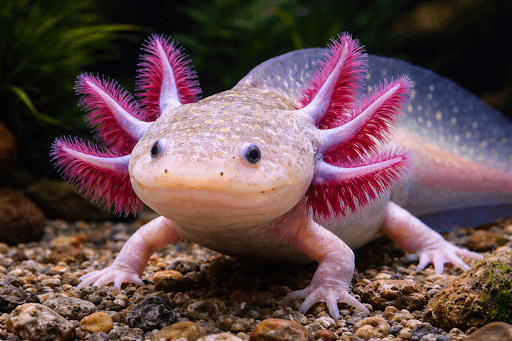 Family LifeThe True Superhero of Nature: The Axolotl’s Regeneration
He never truly grows up. He reproduces while still a larva. He regenerates lost organs. And he always seems to smile. Meet the axolotl—an organism that has outwitted the rules of biology and bec...
17 Jan 2026, 13:16 -
 Family LifeTahajjud Prayer: A Hidden Devotion in the Stillness of the Night
Among the many spiritual practices in Islam, the night prayer—Tahajjud—occupies a distinctive place. This voluntary form of worship, performed after the obligatory ‘Isha prayer and b...
17 Jan 2026, 12:49 -
 Family LifeMaltipoo — a Dog Designed for Happiness
Forget everything you know about dogs — none of it applies here. No service merits, no hunting talents, no noble tomes of pedigree records. That’s a whole different universe. The Maltipoo...
17 Jan 2026, 12:16