Tahajjud Prayer: A Hidden Devotion in the Stillness of the Night

Author
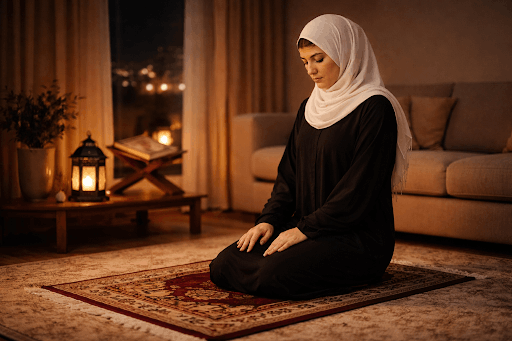
Among the many spiritual practices in Islam, the night prayer—Tahajjud—occupies a distinctive place. This voluntary form of worship, performed after the obligatory ‘Isha prayer and before the advent of Fajr time, constitutes a unique opportunity for the believer to strengthen his or her connection with the Almighty in an atmosphere completely detached from worldly distractions.
Nature and Time of Performance
The Tahajjud prayer is considered a sunnah mu’akkadah—a highly emphasized practice—to which the Messenger of Allah ﷺ gave consistent attention. It is performed after a brief period of sleep during the night. The most virtuous time for this act of worship is the last third of the night, for during this period, according to an authentic hadith, Allah the Exalted descends to the lowest heaven, calling upon His servants to petition Him, seek His forgiveness, and present their supplications.

Preparation for the Night Prayer
Preparation begins with a sincere intention formed in the heart prior to going to sleep. The believer should adopt practical measures to ensure awakening, such as setting an alarm or arranging mutual assistance with family members.
Upon waking, the first act is the performance of minor ablution (wudu’), which not only purifies the body but also symbolizes the transition to a state of spiritual concentration. It is likewise recommended to cleanse the teeth with siwak and to recite the prescribed supplications from the Sunnah while remembering Allah.
Method of Performing the Prayer
The place of prayer should be clean and tranquil. Tahajjud is performed like any other salah, with all its essential pillars and conditions observed. Its principal particularities are as follows:
- Intention (niyyah) is formed in the heart without verbal articulation.
- Number of rak‘ahs: the minimum is two, while the maximum is unrestricted. The rak‘ahs are performed in pairs, with taslim said after every two. The Prophet Muhammad ﷺ commonly performed eleven rak‘ahs, including witr.
- Recitation of the Qur’an: it is preferable to recite long surahs, such as Al-Baqarah, Aal ‘Imran, or An-Nisa’, though any other surahs may be recited according to the worshiper’s ability.
- Completion of the prayer: it is recommended to conclude the night vigil with the witr prayer, if it was not already performed after ‘Isha. The culmination of Tahajjud is the personal and sincere supplication (du‘a’) with which the believer addresses Allah directly.
Merits of the Night Prayer
The significance of Tahajjud is repeatedly emphasized in both the Qur’an and the Sunnah. Allah the Exalted states: “Keep vigil for a part of the night, reciting the Qur’an during extra prayers. It may well be that your Lord will raise you to a station of praise” (Surat Al-Isra’, 17:79).
The Messenger of Allah ﷺ also remarked that the best prayer after the obligatory ones is the night prayer.
Responses to Common Questions
- Intention is a purely internal act of the heart and does not require verbal expression.
- Performing more than eight rak‘ahs is not prohibited; however, it is preferable to emulate the practice of the Prophet ﷺ.
- Tahajjud is performed specifically after sleep. A voluntary prayer performed after ‘Isha without prior sleep is classified as qiyam al-layl.
- The observance of obligatory prayers takes precedence. Voluntary acts of worship, including Tahajjud, attain their full value only when the obligatory duties (fara’id) are scrupulously fulfilled.
- Women during menstruation (hayd) and postnatal bleeding (nifas) are not permitted to perform salah, including Tahajjud.
The Tahajjud prayer is a school of spiritual discipline, a path toward purification of the heart, and a means of attaining special closeness to the Creator. It offers a daily opportunity to set aside the turmoil of worldly existence and to stand before Allah in the silence of the night, seeking forgiveness, strength, and inner illumination. Even modest adherence to this Sunnah has the potential to transform the believer’s life, filling it with profound meaning and divine blessing.
-
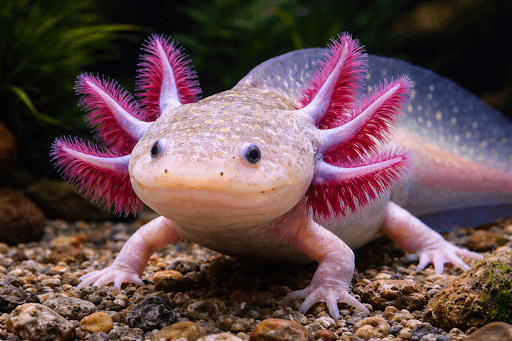 Family LifeThe True Superhero of Nature: The Axolotl’s Regeneration
He never truly grows up. He reproduces while still a larva. He regenerates lost organs. And he always seems to smile. Meet the axolotl—an organism that has outwitted the rules of biology and bec...
17 Jan 2026, 13:16 -
 Family LifeMaltipoo — a Dog Designed for Happiness
Forget everything you know about dogs — none of it applies here. No service merits, no hunting talents, no noble tomes of pedigree records. That’s a whole different universe. The Maltipoo...
17 Jan 2026, 12:16 -
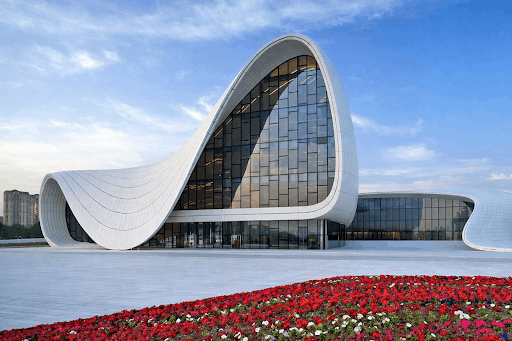 Family LifeHeydar Aliyev Center: How the Project Became a Symbol of Baku
When the world first saw the sketches of the Heydar Aliyev Center in 2007, the reaction was unanimous: this was impossible. A building devoid of straight lines, resembling a frozen wave, an unfurled s...
17 Jan 2026, 11:07