From Kings to Kitchens: The History of Apple Pie

Author
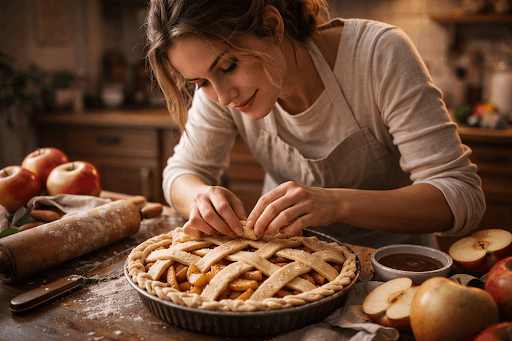
Apple pie is the hero of every autumn, a comfort on a gloomy day, and the reason for family feuds over the last slice. It seems like nothing could be simpler: flour, butter, apples. Yet behind that apparent simplicity lie centuries of culinary wars, political manifestos, and kitchen tragedies when the dough refused to rise.
This is not a dessert. It is a cultural code encrypted in shortcrust pastry and sweet-tart filling. From English kings to American soldiers, from the scatterbrained French sisters to the Italian pastry genius—everyone left their mark on that golden crust.
Spoiler: you’ll never look at sponge-cake-style charlotte again as a humble kindergarten dessert once you learn it may have been born from royal whim or the feverish romantic gesture of an incompetent cook.
A Throne of Dough: Medieval Beginnings and Sugar Shortages
England, 1390. Richard II is on the throne, sugar is worth its weight in gold, and a royal cook holds in his hands one of the earliest written recipes in Europe. No sugar in the filling—only apples, maybe figs for sweetness, and rough pastry as a container. This wasn’t delicate pastry but a practical way to preserve fruit and feed the court. The pie was utilitarian like armor, and just as far from today’s ideal.
A medieval cookbook wasn’t a website with video instructions—it was a strategic document. And in it, apple pie took its place, beginning a journey that would stretch across continents and eras.
The American Dream in a Pie Dish
Now—an ocean leap. The first settlers carried to the New World not only the Bible and hope, but also a sack of apple seeds. A logistical failure at first: no familiar European dessert varieties, only wild sour apples. But the stubborn colonists planted orchards anyway. By the 18th century, the apple tree was as much a part of the landscape as maize.
And here the pie became more than food. In World War II, nostalgic American soldiers told reporters they were fighting “for mom and apple pie.” The phrase “as American as apple pie” turned into a patriotic slogan. Apple pie became an edible symbol of home, comfort, and that elusive “American Dream” that’s hard to explain but easy to bake.
Insider fact: the state of Vermont went the furthest—legalizing apple pie with cheddar cheese as the official state dish. A case where culinary boldness became a political gesture.
Geography on a Plate: From Charlotte to the “Upside-Down Mistake”
While America was building myths, Europe was perfecting form. Each country invented its own dialect in the language of apple pies.
- England stayed loyal to the classic: two layers of pastry, lattice top, apples inside. Conservative and impeccable.
- France gifted the world the tarte Tatin—an inside-out pie. Legend says the Tatin sisters, who owned a hotel, simply mixed up the order of operations: they caramelized the apples first, then added dough on top, and in a panic flipped the finished dessert—accidentally causing a culinary revolution. Genius often springs from chaos.
- The Netherlands doubled down on abundance: a thin shortcrust base piled with crumbly filling and topped with streusel. Minimal pastry, maximum apples—a philosophy dear to anyone who’s ever wished for more filling.
- Austria created the strudel—virtuoso stretched dough, thin as papyrus and incredibly fragile.
- Eastern Europe won hearts with charlotte—sponge batter embracing chunks of apple. Simple, quick, democratic. The history of its name is a detective story with three versions: Queen Charlotte, the Old English word charlyt, or a love-struck cook dedicating dessert to the lady of his heart. Pick the most romantic one.
Secrets From the Pros: How Not to Ruin a Pie
Theory is great, but pies are baked in kitchens, not textbooks. Here, no kings rule—only chefs with obsessive attention to detail.
Take for example the advice of America’s superstar chef Thomas Keller. These are not grandma’s notes on a napkin—they are strict protocols:
- Grated vs. cubed.
Keller insists on a 1:1 mix of grated apples and cubes. The grated ones release moisture fast, creating a purée-like base that keeps the cubes juicy without turning the crust into a swamp. It’s a battle for texture. - Cornstarch as insurance.
Too lazy to grate? Add a spoon of cornstarch to the filling. It binds the juices and keeps the pie from falling apart. - No time to rest.
Shortcrust pie dough isn’t wine—it doesn’t need to “rest” in the fridge. Use it immediately or the surface may flake. - Baking stone magic.
A preheated baking stone (or an upside-down cast-iron skillet) ensures crisp bottom crust. No soggy “underbelly.” - The lattice is functional.
Those pretty strips aren’t just “like grandma made”—they ventilate. Steam escapes, crust stays crisp.
Italian master Iginio Massari adds his own note: lightness. His pie is a cloud of milky dough with bright accents of lemon zest and cinnamon. His secret lies in balance—and in using cooled, not warm, melted butter.

So What Is Apple Pie Today?
It is more than the sum of flour, butter, and apples.
It is a thread connecting medieval England and modern kitchens, soldiers at the front and their homes, the mistake of the Tatin sisters and worldwide fame.
It is a field for experimentation: add cheese like in Vermont, or pears like the Italians, swap wheat flour for almond, sugar for honey.
And finally, it is simply delicious. That moment when a golden slice with steaming filling lands on a plate and a scoop of vanilla ice cream melts beside it. No metaphors—just a fork, a crunch, and a quiet “mmm.”
Apple pie has outlived kings, wars, migrations, and culinary trends. And it clearly isn’t going anywhere. Because apple pie is history you can eat—and the best chapter is the one you’ll bake today.
-
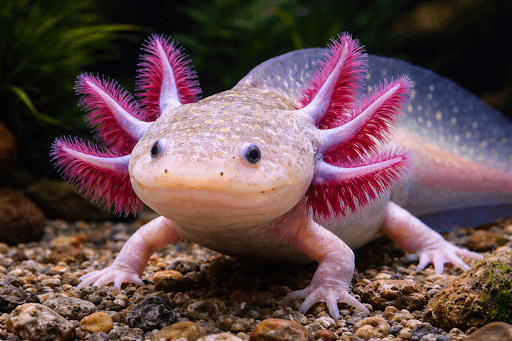 Family LifeThe True Superhero of Nature: The Axolotl’s Regeneration
He never truly grows up. He reproduces while still a larva. He regenerates lost organs. And he always seems to smile. Meet the axolotl—an organism that has outwitted the rules of biology and bec...
17 Jan 2026, 13:16 -
 Family LifeTahajjud Prayer: A Hidden Devotion in the Stillness of the Night
Among the many spiritual practices in Islam, the night prayer—Tahajjud—occupies a distinctive place. This voluntary form of worship, performed after the obligatory ‘Isha prayer and b...
17 Jan 2026, 12:49 -
 Family LifeMaltipoo — a Dog Designed for Happiness
Forget everything you know about dogs — none of it applies here. No service merits, no hunting talents, no noble tomes of pedigree records. That’s a whole different universe. The Maltipoo...
17 Jan 2026, 12:16