The Path of Jafar Jabbarly: From Dream to a Great Culture

Author
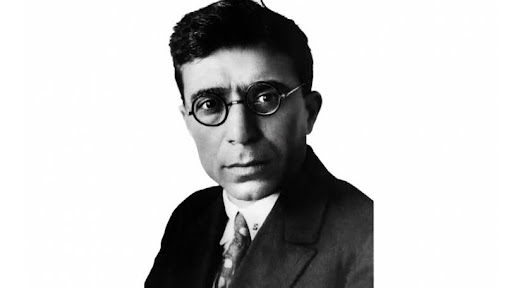
He was a poor poet when he might have become a businessman. His pen struck more precisely than a bullet, and his plays became a mirror in which society recognized its own ulcers. He challenged centuries-old traditions, despots, and social injustice, and within a life of only thirty-five years managed to overturn the cultural consciousness of an entire nation.
The name of this remarkable writer was Jafar Kafar oglu Jabbarly.
An important scholarly note: Jabbarly stands as one of the founders of Soviet Azerbaijani literature and Soviet dramaturgy.
Brief Scholarly Vignettes
- The Young Rebel.
While still a teenager, Jabbarly published more than forty satirical poems, exposing with surgical precision the vices of those in power. - Poison and Greed.
In one of his early plays, the heroine Gulnisa commits murder for the sake of money—an uncompromising depiction of the corrosive power of capital. - The Tragedy of the Idealist.
His character Oktay, an artist of unblemished soul, commits a shocking act of despair in the finale, unable to reconcile lofty ideals with the suffocating vulgarity of reality. - A Protest Doomed to Failure.
The engineer Aydin, driven to desperation by exploitation, plans an act of vengeance against a factory owner, symbolizing the futility of solitary rebellion against an entrenched system.
The Beginning of The Journey
The year is 1915. The world is engulfed in the flames of the First World War. In Azerbaijan, however, a sixteen-year-old young man named Jafar is not producing timid poetic exercises, but a full-fledged four-act drama—“Faithful Sariya, or Laughter Through Tears.” This work was a declaration of the birth of a powerful new talent.
Jabbarly emerged as a cultural architect. He took Azerbaijani literature and decisively guided it toward the path of sharp social realism and romantic protest. His work forms a bridge between Enlightenment ideas and the new Soviet era—a bridge he crossed himself, leaving an indelible imprint. It is no exaggeration to state that Jabbarly laid the foundations of modern Azerbaijani literature.
A telling figure: between 1915 and 1916, Jabbarly published more than forty satirical poems—almost one work per week. Such intensity recalls the rhythm of a modern public intellectual, though his aim was not virality, but moral outrage expressed through exceptional talent.
His spiritual mentor was the great satirist Mirza Alakbar Sabir, from whom Jabbarly inherited the power of laughter as a weapon capable of disarming any adversary. Yet Jabbarly went further: his satire soon evolved into an open protest that found its fullest expression on the theatrical stage.
The Jabbarly Universe: Works That Still Speak to Us
Jafar Jabbarly’s creative legacy is not merely a collection of plays and poems, but a gallery of vivid social and psychological portraits. His oeuvre may conventionally be divided into two periods, yet both are united by a defining quality: their enduring relevance and profound insight into the human soul.
The Early Period: Revolt Against Philistinism and Capital
In his early dramas, Jabbarly appears as a merciless diagnostician of social maladies.
- “Withered Flowers” and “Faithful Sariya.”
Here he exposes the ulcers of patriarchal life—greed, ignorance, and the commodification of human feelings—portrayed with almost Shakespearean intensity. A mother is prepared to destroy her daughter’s happiness for the sake of inheritance; a heroine poisons her husband. A world ruled by money emerges as a prison without escape. - “Aydin” and “Oktay El-oglu.”
These plays represent a direct challenge to the emerging capitalist order. Aydin, a gifted but impoverished engineer, becomes a plaything in the hands of the cynical capitalist Dovlet-bek. His personal tragedy and failed rebellion demonstrate the helplessness of the individual before the system.
Yet the true jewel is the tragedy of Oktay—an artist and idealist who dreams of a national theater but confronts a world in which everything is bought and sold. His conflict with the careerist Aslan-bek, willing to sacrifice all for money and status, is a clash between spirit and pragmatism. The shocking finale, in which Oktay kills his beloved to “save her ideal” from the filth of the world, represents a moment of supreme tragedy, where despair overwhelms reason.
The Mature Period: In Search of a New Path
With the establishment of Soviet power, Jabbarly’s art evolves without losing its intensity. He turns to the question of social transformation and the place of the individual within it.
- “Sevil.” This play became a cultural manifesto. The story of Sevil—an oppressed, uneducated woman who passes through humiliation toward awakening and independence—deeply affected contemporaries. Her spiritual rebirth symbolizes the rebirth of an entire people. The figure of the teacher Gyulyush, who guides Sevil, embodies the new, enlightened forces of society.
- “The Bride of Fire” (originally “Babek”). Turning to history allowed Jabbarly to speak about the present. The leader of a popular uprising, Elkhan, struggles not only against Arab conquerors, but also against religious obscurantism and spiritual servitude. His final choice between personal love and devotion to the ideal of freedom is a powerful romantic statement about sacrifice on the road to a better future.
- “In 1905.” Here Jabbarly reaches the level of large-scale social analysis. Using the real Armenian–Azerbaijani conflict as material, he demonstrates how ruling classes manipulate national hostility to distract people from the true struggle—the class struggle. The presence of the Russian revolutionary Volodin, who calls for unity, lends the play a genuinely internationalist character.
Legacy
Jafar Jabbarly died young, yet he accomplished what matters most: he made people weep and protest, reflect and argue. He was never afraid of boldness, but he always remained honest—above all, before his people and before art itself. His plays continue to be staged today because the questions he raised remain unresolved, and the passions he depicted are eternal.
-
 Family LifeThe True Superhero of Nature: The Axolotl’s Regeneration
He never truly grows up. He reproduces while still a larva. He regenerates lost organs. And he always seems to smile. Meet the axolotl—an organism that has outwitted the rules of biology and bec...
17 Jan 2026, 13:16 -
 Family LifeTahajjud Prayer: A Hidden Devotion in the Stillness of the Night
Among the many spiritual practices in Islam, the night prayer—Tahajjud—occupies a distinctive place. This voluntary form of worship, performed after the obligatory ‘Isha prayer and b...
17 Jan 2026, 12:49 -
 Family LifeMaltipoo — a Dog Designed for Happiness
Forget everything you know about dogs — none of it applies here. No service merits, no hunting talents, no noble tomes of pedigree records. That’s a whole different universe. The Maltipoo...
17 Jan 2026, 12:16