Azerbaijan National Academy of Sciences - Academy of Sciences
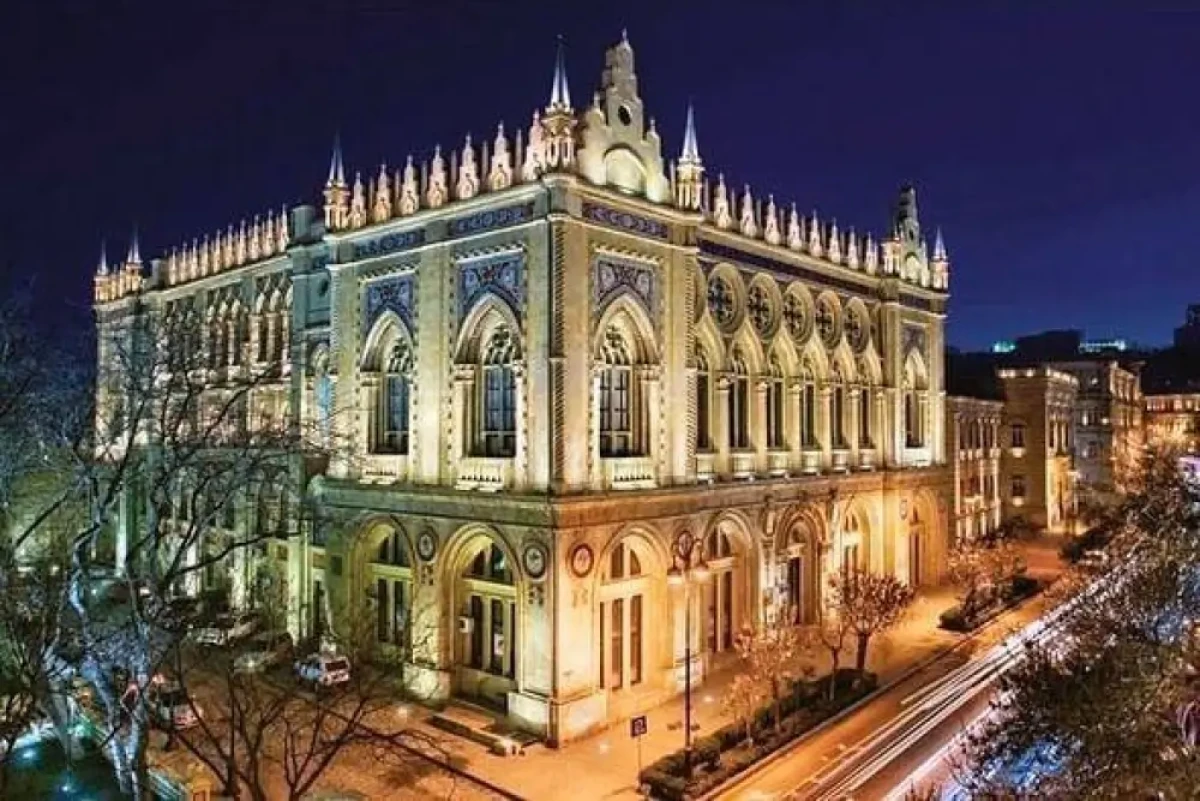
- Huseyn Javid avenue, 117, Baku
- (+994 12) 539-22-61
- (+994 12) 539-29-62
- (+994 12) 539-30-60 (təhsil şöbəsi)
- AZ1141
- https://elm.az


28 May-Cəfər Cabbarlı-Dərnəgül, 28 May-Cəfər Cabbarlı-Dərnəgül (305 m)
6, 206, 59, 18, Ekspres M2, Ekspres M2A, 17, 3, 10 (305 m)
39, 96 (338 m)
-
AMEA (ANAS) — The Azerbaijan National Academy of Sciences is the country’s main scientific institution. It oversees both theoretical and applied science in Azerbaijan.
History
Founded in 1935 as a branch of the USSR Academy of Sciences
Became the Academy of Sciences of the Azerbaijan SSR in 1945
Granted National Academy status in 2001
Team
President: Isa Habibbayli
The Academy includes 73 full members (academicians) and 114 corresponding members
-
Publishes scientific books and articles: 604 books and 4,208 articles, including 2,427 in journals with impact factors Oversees scientific research across multiple disciplines
-
Organizes international conferences
Publishes the National Encyclopedia (since 2004)
Sets standards for doctoral programs and research activities
-
Around 10,000 employees, including nearly 5,000 researchers, 664 Doctors of Science, 2,026 PhD holders
The structure includes 6 divisions, ~30 institutes, and several regional centers
-
ANAS is non-profit and funded by the state budget
Participates in government projects, international programs, and receives research grants
-
1945 – Official founding
2001 – Became a National Academy
2003 – Recognized as the main scientific center of the country
-
Member of international scientific organizations: ISC, IAP, AEAAC, EURAS
-
Supports regional scientific centers in Nakhchivan, Ganja, Lankaran, Sheki, and Quba
Preserves cultural heritage, manages museums and botanical gardens
-
Join more international scientific bodies
Expand digital transformation and strengthen research centers
Continue project-based work and PhD admission programs
TOP 10 places nearby
-
 Baku Office of Shamakhi Astrophysical Observatory
 -
Institute of Literature named after Nizami Ganjavi ANAS (Baku)
-
Institute of Architecture and Art ANAS (Baku)
-
Institute of Linguistics named after I. Nasimi ANAS (Baku)
-
Institute of Economics ANAS (Baku)
-
Institute of History and Ethnology named after A.A. Bakikhanov ANAS (Baku)
-
Institute of Philosophy ANAS (Baku)
-
Institute of Oriental Studies named after Academician Z.M. Bunyadov ANAS (Baku)
-
Institute of Archaeology and Anthropology ANAS (Baku)
-
Institute of Geography named after Academician H. Aliyev ANAS (Baku)