Schengen Visa from Azerbaijan: The Biometrics Battle, or How to Complete the “Euro-Tour” Quest Without a Nervous Breakdown

Author
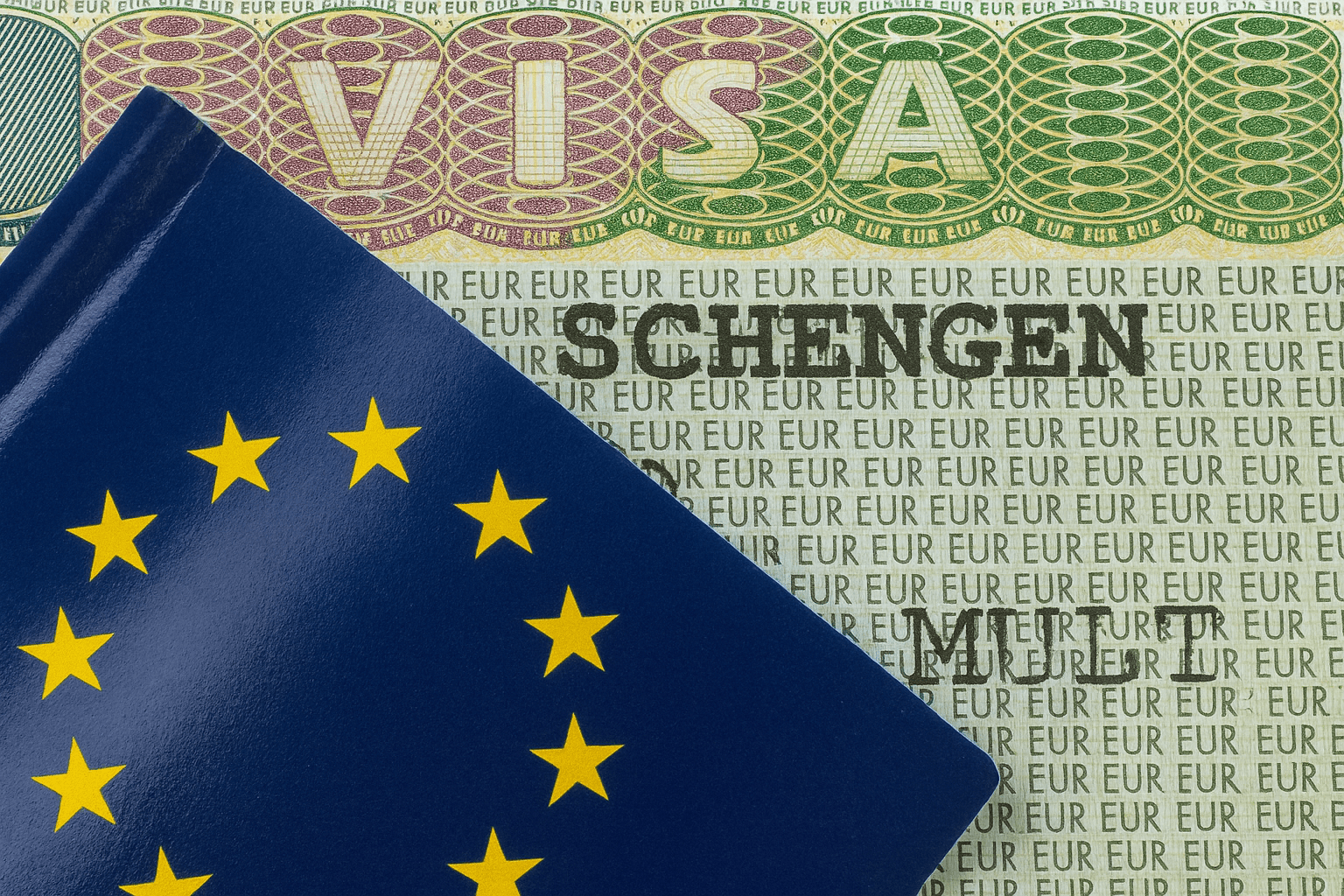
The scent of a warm Parisian croissant, the echo of the Colosseum, the dream of a photo by the Brandenburg Gate — all of it seems to call you toward the road. Yet between you and this European dream stands one small but remarkably capricious obstacle: the Schengen visa. This is not merely a stamp in your passport; it is a full-fledged exam for the title of “ideal traveler.” Your bank statement becomes an essay, your employment letter — an official character reference. And yes, the rules of this game have recently changed.
Spoilers from Real Life
- Orkhan, who assembled a document folder thicker than War and Peace, received a refusal because his income statement was printed on the wrong company letterhead. His grand journey now consists of trips between VFS Global and Capago.
- Leyla believed that a grant to attend a conference in Berlin guaranteed her visa. She was wrong. It is not enough to want to go to Europe — you must prove you will return from it.
- Ruslan cynically notes: “For Azerbaijani citizens, obtaining a Schengen visa is relatively difficult.” And that is putting it gently.
The EU, acting like a strict schoolmaster, has tightened the screws. As of 2025, the visa is becoming not merely a travel permit but a “geopolitical lever.” Cooperate well with Brussels (read: accept the return of your irregular migrants), and you receive visa concessions. Fail to do so, and expect the consulate to scrutinize your application longer than the Middle Ages lasted. But panic is premature — because we will now dissect this entire process. Not as an official guide, but as a strategy for storming the fortress known as Schengen.
Let us leave the clouds and descend to earth — here are the steps that actually lead to success.
Step 1: Choosing “Your” Consulate — A Strategic Game of Roulette
You do not apply “to Europe.” You choose the primary country of your visit — where you will stay the longest or where the main purpose of your trip lies. And here the folklore of statistics and rumors begins.
The most common advice among the “experienced”: apply to the country where it is allegedly “easier.” The usual favorites include the Czech Republic, Poland, the Baltic states, and Slovakia. A curious fact: unofficially, approval rates for Azerbaijani applicants can be 10–15% higher in some Eastern European countries. This is not magic; it is usually due to lower application volume and more transparent requirements.
But pause. The easiest consulate is not the one rumored to be lenient — it is the one that aligns with your strongest justification.
- Have an invitation from a German company? Your destination is Visametric (Germany only).
- Dreaming of the French Riviera? Go to Capago (France, Spain, the Netherlands).
- Planning a multi-country tour? Choose based on the country of first entry or longest stay.
- VFS Global — your portal to Austria, Italy, the Baltics, Norway, Iceland. A kingdom of online appointments and strict protocols.
- Capago — French charm meets Spanish temperament. They may be meticulous, but they appreciate well-organized documents.
- Visametric — German precision in Winter Park Plaza. Efficient, unemotional, to the point.
- BLS — exclusive for Hungary and Slovakia, though the documents mysteriously end up… at Visametric. Logistics is everything.
- Embassies directly — Greece, Switzerland, Poland, Romania (for those who prefer dealing with the source).
The entry fee for this grand ball: €80 for adults (cheaper for children, free for under 6), plus a visa-center service fee of about €20–30. These fees are nonrefundable — refusals included. Consider this your stake in the game.
Step 2: Document Collection — Creating the Perfect Dossier on Yourself
Here, you are the investigator assembling irrefutable evidence of your reliability. Every document must shout one of two things:
“My circumstances here are excellent” or “I will definitely return.”
The Core Set
-
Passport — valid at least 3 months beyond your return date, with two full blank pages.
-
Application form — completed online, printed, and signed. One mistake may mean reprinting; serious discrepancies may lead to refusal.
-
Photo — 3.5×4.5 cm, biometric, recent (within 6 months), professional.
-
Travel medical insurance — minimum coverage €30,000. Without it, do not even attempt to apply.
-
Proof of financial means — the most delicate part.
-
Bank statements for 3 months with sufficient balance and regular transactions.
-
No official employment? Provide a sponsorship letter plus the sponsor’s income documents.
-
Entrepreneur? Tax reports, registrations, bank flows.
The consul must see financial stability. -
Flight and hotel reservations — golden tip: use refundable or free-cancellation bookings. Do not buy non-refundable tickets before receiving your visa.
-
Employment/student letter — on official letterhead, with salary and the phrase “position retained for the period of travel.”
Your task is not merely to fill a folder, but to construct a narrative. Your dossier should tell a coherent story:
“I, a successful and stable citizen of Azerbaijan, intend to admire the Eiffel Tower using my legitimately earned money and will return precisely in 10 days to my beloved job and family.”
That is the essence.
Step 3: Submission and Interview — The Moment of Truth
You book online, appear on time, and submit fingerprints. The interview is not an interrogation but the final brushstroke to your narrative.
You may be asked:
-
“Why are you going to Italy?”
-
“Where will you stay?”
-
“What does your sponsor do?”
Answer clearly, confidently, and consistently with your documents. No unnecessary details.
If attending a conference — show the invitation.
Visiting a friend — show their status and accommodation details.
Above all: no falsehoods. Verification is easy; consequences can include a lifetime ban.
Step 4: Waiting — The Most Nerve-Wracking Stage
Standard processing time: 7–15 working days.
But it may stretch to 30–45 days, especially for secondary checks or during busy seasons.
Golden rule: apply 1.5 months before travel, but not earlier than 6 months.
In Summary: Numbers, Facts, and a Touch of Cynicism
-
Cost: €80 consular fee + ~€25 service = ~€105 worth of hope.
-
Validity: up to 5 years (rare), more commonly 6 months–1 year. Multiple-entry visas are the holy grail for proven travelers.
-
Types:
-
C visa — tourism, business, up to 90 days.
-
D visa — long-term study, work (a different story entirely).
-
Top reasons for refusal: insufficient finances, doubts about return intention, incorrect or fraudulent documents.
The new EU visa code is a game of geopolitical foresight. Europe is turning the visa into an instrument of leverage. But for the ordinary traveler from Baku, the core rules remain unchanged:
transparency, impeccable preparation, and a logically structured trip.
Can you win this battle?
Yes.
Must you play by their rules?
For now — absolutely.
So prepare your flawless dossier, choose your strategy, and go claim your Schengen visa. May your passport soon bear the coveted sticker, and may the cafés and museums of Europe wait patiently for you.
-
 Family LifeThe True Superhero of Nature: The Axolotl’s Regeneration
He never truly grows up. He reproduces while still a larva. He regenerates lost organs. And he always seems to smile. Meet the axolotl—an organism that has outwitted the rules of biology and bec...
17 Jan 2026, 13:16 -
 Family LifeTahajjud Prayer: A Hidden Devotion in the Stillness of the Night
Among the many spiritual practices in Islam, the night prayer—Tahajjud—occupies a distinctive place. This voluntary form of worship, performed after the obligatory ‘Isha prayer and b...
17 Jan 2026, 12:49 -
 Family LifeMaltipoo — a Dog Designed for Happiness
Forget everything you know about dogs — none of it applies here. No service merits, no hunting talents, no noble tomes of pedigree records. That’s a whole different universe. The Maltipoo...
17 Jan 2026, 12:16