



Resource Conservation in Azerbaijan: Between Rising Tariffs and a Green Future
Utility payments make up a significant share of household expenses in Azerbaijan. On average, around 15% of income is spent on these services, and in the capital this figure can be even higher. At the same time, the country is undergoing an...

Author
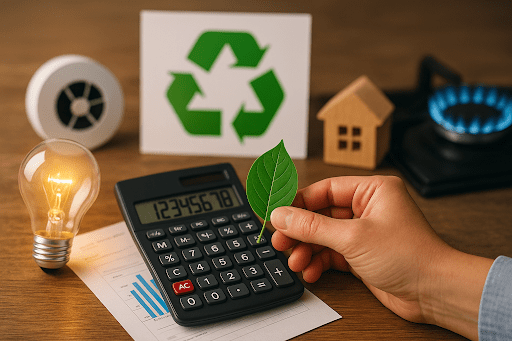
Utility payments make up a significant share of household expenses in Azerbaijan. On average, around 15% of income is spent on these services, and in the capital this figure can be even higher. At the same time, the country is undergoing an important transitional phase: on one hand, there is a scheduled adjustment of tariffs; on the other, ambitious renewable-energy projects are being implemented, which may fundamentally change long-term approaches to resource consumption.
Regional Imbalance and Incentive Measures
Statistics indicate a substantial imbalance in resource consumption. Baku, home to about 23% of the country’s population, accounts for 36% of all gas consumption and 42% of electricity use. Meanwhile, many regions — especially border villages — face population outflow.
To address this issue, lawmakers are considering an initiative to reduce gas, electricity, and water tariffs in border settlements by a factor of three. The goal is to encourage resettlement, ease the burden on the capital, and stimulate regional economic growth.
Experts note that lowering utility costs should be part of a broader program that includes support for small businesses, streamlined administrative procedures, and the creation of new jobs.
Current Tariffs and Planned Changes
As of early 2025, adjusted utility tariffs are in effect nationwide. The increases were implemented in a differentiated manner, depending on consumption volumes:
- Natural gas: for most subscribers (around 48%), the tariff increase is minimal — 0.5 qəpik per cubic meter, raising the average monthly bill by roughly 32 qəpik. The increase is most noticeable for those whose annual consumption exceeds 2,500 cubic meters.
- Electricity: the majority of consumers (65%) will see only a slight rise in monthly bills — on average 45 qəpiks. The increase is more significant for households consuming over 300 kWh per month.
A legislative initiative also deserves special attention: beginning in 2028, a fixed component may be introduced into gas and electricity tariffs. This fee, unrelated to consumption volume, is intended to offset infrastructure maintenance costs. Economists note that such a measure could increase the financial burden on citizens, particularly for those with unused or vacant housing.
A Strategic Shift Toward Green Energy
In parallel with tariff regulation, Azerbaijan is actively developing renewable energy sources (RES). The country has substantial potential — an estimated 135 GW on land and 157 GW offshore.
Large-scale projects are being implemented with international investors, including the construction of the Shafag solar power plant in Jabrayil, the Khizi-Absheron wind farm, and solar plants in Bilasuvar and Neftchala. The goal is to increase the share of RES in installed generation capacity to 30% by 2030. Developing green energy not only strengthens export potential but may also help stabilize domestic tariffs in the future by reducing dependence on conventional fuels.
Practical Measures for Efficient Consumption
Given current conditions, efficient resource use remains an effective way to optimize household expenses. Useful measures include:
- Eliminating “phantom” consumption: unplugging idle devices (chargers, TVs on standby) can reduce electricity bills by 10–15%.
- Modernizing lighting: replacing incandescent bulbs with LEDs ensures long-term energy savings.
- Optimizing appliance use: running washing machines and dishwashers with full loads, placing refrigerators away from heat sources, and using eco-modes.
- Saving water: installing faucet aerators, taking showers instead of baths, and fixing leaks.
- Efficient gas use: cooking with properly sized cookware and lids, boiling only the needed amount of water, and adjusting indoor temperature settings.
The situation with utility services in Azerbaijan reflects a comprehensive approach that combines short-term tariff regulation, a long-term strategy for transitioning to green energy, and measures aimed at balanced regional development.
Mindful resource consumption by residents plays a crucial role in this system, helping to mitigate the impact of economic factors on household budgets.
-
 Culinary RecipesEveryone’s Favorite Pancakes: an Interesting History and a Classic Recipe
A pancake lies on your plate—modest, golden, smelling of childhood and butter. Don’t be fooled. It’s one of the oldest gastronomic t...
23 Jan 2026, 11:24 -
 ReligionHoliday Prayer (Ṣalāt al-ʿĪd) in Islam: Structure, Symbolism, Significance
There arrives that singular dawn when the air seems to vibrate with quiet joy. Cities and villages still slumber, yet in Muslim homes lights begin to...
23 Jan 2026, 08:00 -
 ReligionBeginning the Day with Worship: On the Morning Prayer
Once, at the very break of dawn, when the world stood still in anticipation of the first ray of light, the Prophet Muḥammad (peace and blessings be up...
23 Jan 2026, 06:48