



Ballon d’Or 2025: The Parisian Repartition and the Triumph of Football’s New Kings
As the saying goes, history is written by the victors. On 22 September 2025, in Paris’s Théâtre du Châtelet, that history was rewritten by Paris Saint-Germain. What was expected to be an intriguing clash of individu...

Author
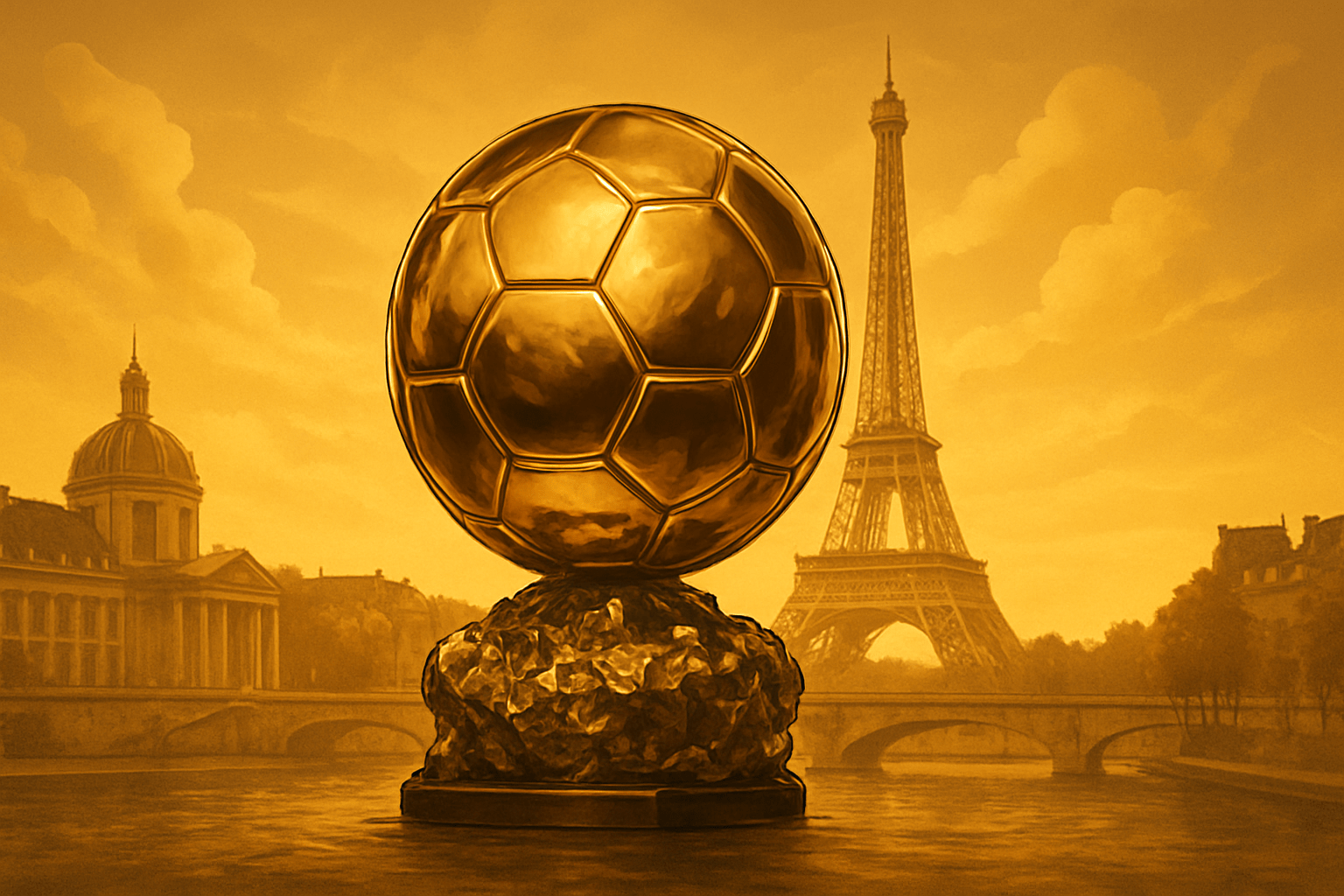
As the saying goes, history is written by the victors. On 22 September 2025, in Paris’s Théâtre du Châtelet, that history was rewritten by Paris Saint-Germain. What was expected to be an intriguing clash of individual ambitions at the Ballon d’Or ceremony instead became a total demonstration of dominance by a single club, a single philosophy, and a single city. This was not merely an awards evening; it was a manifesto of a new footballing era—one in which collective supremacy outweighs individual genius, and where tactics prevail over talent when talent is not embedded within a system.
The Men’s Ballon d’Or: A Revolution in Violet and Blue
The final men’s Ballon d’Or top ten resembled a PSG squad list with a few honorary guests. Five Parisian players occupied places in the top ten—Dembélé, Vitinha, Hakimi, Mendes, and Donnarumma. This was not success; it was total annihilation. It was empirical evidence of how Luis Enrique, duly awarded Best Coach, constructed not merely a team but a footballing mechanism in which every cog is a world-class star.
Ousmane Dembélé: A Career-Long Metamorphosis

His victory reads like the perfect script for a Hollywood sports drama. A player whose career was repeatedly derailed by injuries and accusations of inconsistency managed, in a single season, to assemble all the missing pieces. Pace, efficiency in front of goal, decisiveness. He was not merely a component of Enrique’s system—he was its spearhead. His Ballon d’Or is a reward not only for goals and assists, but for extraordinary resilience, for the capacity to rise after every fall.
Why PSG Conquered All: Philosophy over Stardom
For years, PSG attempted to purchase Champions League glory by assembling superstars, and were criticized for lacking soul. Under Luis Enrique, the club did not buy stars—it bought a philosophy. Relentless pressing, total control of possession, extreme intensity. Players once viewed as gifted individualists—Dembélé and Vitinha among them—were integrated into this system and began performing with unprecedented efficiency. Five players in the top ten represent five separate proofs that a properly designed tactical framework can multiply talent geometrically. Best Club of the Year? Inevitably.
The Evening’s Principal Casualty: Pedri and Barcelona’s Quiet Collapse

While Paris celebrated, Barcelona was likely gripped by disbelief. How could Pedri—the cerebral core of a team that secured a domestic treble—fail to even enter the top ten, finishing in a humiliating eleventh place? The answer is harsh yet straightforward: in the modern Ballon d’Or electorate, global dominance in the Champions League outweighs local success. Pedri’s elegant control and subtle passing were defeated by ruthless efficiency and by the “big-eared” trophy that traveled to Paris. This was not a verdict on the player, but on contemporary priorities.
Lamine Yamal: A Future That Has Already Arrived

The sole figure capable of challenging Parisian hegemony was an 18-year-old phenomenon from Barcelona. His second place in the Ballon d’Or voting and his second consecutive Kopa Trophy send a clear signal to the footballing world. He is not merely the most talented teenager on the planet; he is already among the very best players—without any age-related caveats. His coronation will come, but even now it is evident that he represents the principal hope of those who still believe in magic over machinery.
The Women’s Ballon d’Or: The Bonmatí Era and Arsenal’s Triumph

If the men’s game experienced a revolution, the women’s game witnessed the consolidation of an existing empire. Aitana Bonmatí claimed her third consecutive Ballon d’Or—a statistic that speaks for itself. She is not simply the best; she is the defining force of her era.
What did Bonmatí accomplish in 2025? She functioned as a midfield conductor, dictating tempo for both Barcelona and the Spanish national team. Her extra-time goal in the Euro 2025 semifinal was not merely a goal—it was an act of pure will. She wins trebles, reaches Champions League finals, and does so with such footballing intelligence that it often appears she is playing a different, more sophisticated game than everyone else.
Arsenal vs Barcelona: Tactical Victory over Individual Brilliance
Women’s football delivered the season’s most compelling tactical drama. Barcelona—with its constellation of stars (four players in the top ten) and Bonmatí at the helm—entered every competition as favorites. Yet in the Champions League final, Arsenal, under Renée Slegers, achieved a remarkable feat. A disciplined 1–0 victory represented the triumph of structure, precision, and collective sacrifice. That victory, ending an 18-year wait, earned Arsenal the Best Club of the Year award. It was a system defeating a super-team.
New Awards, New Heroines
For the first time, the Kopa, Yashin, and Gerd Müller trophies were awarded in women’s football—a symbol of the sport’s growing professionalization and depth.
- Vicky López (Kopa Trophy): Barcelona’s 19-year-old gem. Her triumph offers a glimpse into a future no less luminous than the present.

- Hannah Hampton (Yashin Trophy): Chelsea’s goalkeeper, whose composure and penalty-shootout heroics at Euro 2025 were instrumental in England’s triumph. Her award confirms that the modern goalkeeper is not the final line of defense, but the first architect of attack.

- Eva Pajor (Gerd Müller Trophy): 43 goals in 46 matches—figures that require no elaboration. Barcelona’s goal-scoring machine, whose efficiency underpinned all of the Catalans’ successes.

Sarina Wiegman: A Coach Who Forges Champions
The Johan Cruyff Trophy awarded to Sarina Wiegman recognizes a body of work bordering on the phenomenal. Three consecutive European Championships as head coach (Netherlands 2017, England 2022, England 2025) constitute a historic achievement. She is not merely a tactician; she is a psychologist capable of forging a winning mentality—something she once again demonstrated by guiding England through the crucible of knockout football.
Behind the Scenes of the Grand Ceremony
While the world debated Dembélé’s triumph, equally dramatic narratives unfolded backstage. Gianluigi Donnarumma, winner of the Yashin Trophy, produced what statisticians describe as a “perfect storm” season—his saves in the Champions League knockout rounds were worth as much as goals.
Viktor Gyökeres, the unassuming Swede from Sporting and Arsenal, captured the Gerd Müller Trophy. His story challenges football’s elite hierarchy: he proved that one can be the world’s top scorer without performing in a “top-five” league.
The Xana Foundation, recipient of the Socrates Award, reminded everyone that beyond golden trophies lies something greater—the capacity of football to change lives and offer hope.
Final Whistle: How Will 2025 Be Remembered?
The Ballon d’Or 2025 ceremony will be remembered as a turning point.
- The end of an era. Lionel Messi and Cristiano Ronaldo were not merely absent; their absence was marked by the triumph of a player whose journey was filled with doubt, and by a club that discovered success not through stars, but through ideas.
- The triumph of the system. In both men’s (PSG) and women’s (Arsenal) football, the highest honors went to collectives that proved disciplined tactics and cohesion can defeat any accumulation of individual talent.
- The maturity of women’s football. The introduction of new awards and the intensity of competition between clubs and national teams demonstrated that women’s football has reached unprecedented levels of depth, drama, and professional recognition.
The year 2025 has settled the debate. A new era has not merely begun—it has already found its heroes, its symbols, and an entirely new hierarchy of values. And the principal lesson endures: football remains a team sport. Only now, victory is rewarded not just with trophies, but with Ballons d’Or. Many Ballons d’Or.
-
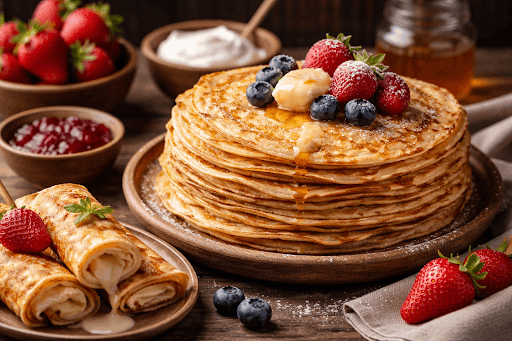 Culinary RecipesEveryone’s Favorite Pancakes: an Interesting History and a Classic Recipe
A pancake lies on your plate—modest, golden, smelling of childhood and butter. Don’t be fooled. It’s one of the oldest gastronomic t...
23 Jan 2026, 11:24 -
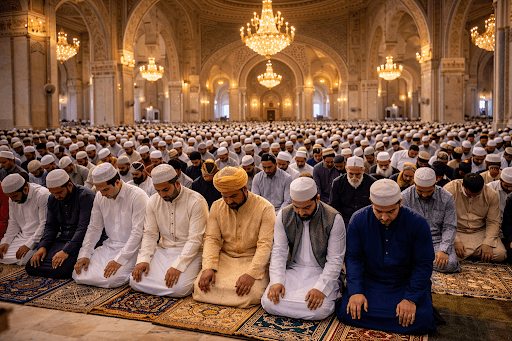 ReligionHoliday Prayer (Ṣalāt al-ʿĪd) in Islam: Structure, Symbolism, Significance
There arrives that singular dawn when the air seems to vibrate with quiet joy. Cities and villages still slumber, yet in Muslim homes lights begin to...
23 Jan 2026, 08:00 -
 ReligionBeginning the Day with Worship: On the Morning Prayer
Once, at the very break of dawn, when the world stood still in anticipation of the first ray of light, the Prophet Muḥammad (peace and blessings be up...
23 Jan 2026, 06:48