



Tom Hanks: The Paradox of the Ideal American
He collected two consecutive Oscars, became a distant relative of Abraham Lincoln by sheer accident, and turned the story of an intellectually disabled runner into a global obsession. His face signifies American virtue; his name is synonymo...

Author
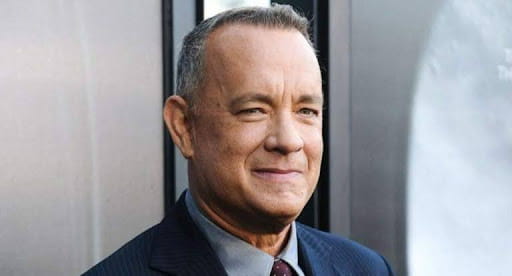
He collected two consecutive Oscars, became a distant relative of Abraham Lincoln by sheer accident, and turned the story of an intellectually disabled runner into a global obsession. His face signifies American virtue; his name is synonymous with box-office success.
Yet behind the smile of “the nicest guy in Hollywood” hides the man who survived on a deserted island, fought in Normandy, and spent eighteen years in an airport terminal. Before us stands the paradox known as Tom Hanks: an icon whose films have amassed nine billion dollars worldwide, and a man whose life itself reads like a screenplay replete with unexpected twists.
His career serves as a master class in how to navigate the 1980s through comedies about mermaids and talking dogs, and the 1990s by collecting every possible award and becoming a national treasure. He represents the rare case of an actor beloved by all—from film critics to conspiracy theorists who accuse him of consuming adrenochrome.
Tom Hanks is an actor with virtually no “throwaway” roles. His films invariably offer narrative substance, emotional resonance, and the sense that one’s time has been well spent.
From Popcorn Seller to Lincoln’s Neighbor: How to Build a Career on Tomato Soup
Thomas Jeffrey Hanks was born on July 9, 1956, in California, into a family where divorce served only as the opening act of a longer domestic drama. After his parents separated, five-year-old Tom and his siblings remained with their father—a cook—who moved with them through ten houses in five years.
The children learned to survive. Their meals consisted of tomato soup and frozen peas, and the future actor sold peanuts at the Oakland stadium in order to earn at least something. Later, he carried suitcases in a hotel whose guests included both uninhibited beauties and Elvis Presley himself.
Irony had its way: decades later, Hanks would portray Elvis’s manager in Baz Luhrmann’s biopic.
A micro-history: in 2012, Steven Spielberg mused over who might play Abraham Lincoln. Hanks auditioned, but the role ultimately went to Daniel Day-Lewis. It was later discovered that Tom was, in fact, a distant relative of the sixteenth U.S. president. Sometimes genetics is less a sentence and more a curious fact for a trivia quiz.
Hanks abandoned college in favor of a theater troupe in Cleveland. His film debut came in the low-budget horror picture He Knows You’re Not Alone (1980). His breakthrough, however, was Splash (1984), in which he fell in love with Daryl Hannah’s mermaid. But the true turning point arrived with the 1988 comedy Big, in which Hanks played a 12-year-old boy trapped in an adult’s body. For this performance he received a Golden Globe and his first Academy Award nomination. It was at this moment that he ceased being “just a comic actor” and began his ascent toward legend.
Two Oscars, Twenty-Five Kilograms Back and Forth, and Adrenochrome That Never Was
The 1990s were an era of total triumph. First came Philadelphia (1993), in which Hanks portrayed a lawyer dying of AIDS, losing ten kilograms in the process—an effort widely discussed afterward. The role earned him his first Oscar. The following year brought Forrest Gump. The story of a “local simpleton” who becomes a national hero grossed $678 million and won six Academy Awards. Because Hanks negotiated a percentage of the profits, the film earned him $70 million. As Mrs. Gump said: “Life is like a box of chocolates.” Sometimes one of them turns out to be a gold bar.
A humorous figure to note:
7 — the number of consecutive Hanks films that earned over $100 million at the box office, a Guinness World Record.
Behind this near-perfect career stood harsh personal sacrifices. For various roles he repeatedly gained and lost large amounts of weight: +13 kg for the baseball coach in A League of Their Own (thanks to a nearby ice-cream parlor), and –22 kg for Cast Away. Production on the latter even paused for a year to allow Hanks to transform. The reckoning came in 2013, when Hanks revealed that he had Type 2 diabetes. Physicians blamed the weight fluctuations; Hanks blamed his own carelessness. “I was an idiot,” he admitted.
A Typewriter Collection, a Greek Passport, and a Marriage Outlasting Entire Careers
Off-screen, Hanks is a man of contrasts. For more than forty years he has collected typewriters, and in 2017 he published a short-story collection titled Uncommon Type. He adores space exploration, produced the series From the Earth to the Moon, and even has an asteroid named after him (12818 Tomhanks). He is also a devoted fan of English football and supports Aston Villa—not for its trophies but because the name reminded him of “a cozy spa.”
In 1988 he married actress Rita Wilson. He converted to Orthodox Christianity for her, and in 2019 they both obtained Greek citizenship. Their marriage stands as a model of Hollywood stability: more than three decades together, two sons, not a single scandal. At the 2013 Tony Awards, while others posed for photographers, Hanks filmed his wife on his phone. “She is more to me than a wife—she is my friend, my mother, my lover,” he said.
Hanks does not shy away from politics: he supported Barack Obama, donated to campaigns against Proposition 8, and after Donald Trump’s victory in 2024 declared that he would leave the United States. The man who played numerous captains decided to change course himself.
Captain on Screen, Outsider in Life, Icon Against the Odds
Hanks has played five captains—from Apollo 13 to Greyhound. He remains the only villain in the Coen brothers’ filmography (The Ladykillers). He declined Jerry Maguire because he desperately wanted to take part in the psychological drama of Forrest Gump. He survived blood poisoning during the filming of Cast Away and dislocated his shoulder by falling through a German bunker while preparing for Band of Brothers.
Tom Hanks is a person who has demonstrated that one can remain kind in Hollywood without being consumed by it. His films have earned nine billion dollars, yet his greatest role is arguably himself. The “Dad of America,” he seems to know that life is not merely a box of chocolates but a complex puzzle, with space for tragedy, comedy, and a love that lasts longer than the applause at the Oscars.
He left, but promised to return. Like his characters, he always finds the way home—even if it requires crossing an ocean, surviving a war, or simply waiting for a presidential term to end.
Films for the Weekend: Ten Essential Tom Hanks Works
Tom Hanks’s filmography is a rare example of sustained artistic excellence across decades. His characters are neither superheroes nor abstract symbols, but ordinary people in whom audiences can readily recognize themselves. For this reason, Hanks’s films retain their relevance and remain compelling long after their release.
To simplify your search and save time, here is a curated top-ten list of Hanks films ideal for weekend viewing—ranging from profound dramas to light, inspiring stories:
- Forrest Gump (1994)
A cultural phenomenon. A simple narrative about kindness, faith, and humanity—and one of Hanks’s most memorable performances. - The Green Mile (1999)
A heavy, profound, and deeply moving film about compassion, injustice, and the miraculous. Best viewed unhurried—and with tissues. - Cast Away (2000)
Nearly the entire film consists of one actor and one island. A story of survival, solitude, and existential reckoning, held together by Hanks without dialogue. - Saving Private Ryan (1998)
One of the most realistic war films ever produced. Hanks portrays not a heroic emblem but a human being in the chaos of war. - Catch Me If You Can (2002)
A light, dynamic, and stylish Spielberg film. Hanks, as an FBI agent, plays with charisma and restrained humor. - Apollo 13 (1995)
The story of a real space disaster that became a triumph. Intelligent, tense, and deeply inspiring. - The Terminal (2004)
A warm and slightly naïve tale of a man stranded between nations and destinies. One of Hanks’s most “good-natured” films. - Big (1988)
The film that made Hanks a star. A humorous and touching story of a child in an adult’s body. - Captain Phillips (2013)
A contemporary thriller based on actual events. Minimal pathos, maximum tension, and superb acting. - Bridge of Spies (2015)
Cold War diplomacy and moral choice. A calm, intelligent film for thoughtful viewing.
Enjoy the screening!
-
 Culinary RecipesEveryone’s Favorite Pancakes: an Interesting History and a Classic Recipe
A pancake lies on your plate—modest, golden, smelling of childhood and butter. Don’t be fooled. It’s one of the oldest gastronomic t...
23 Jan 2026, 11:24 -
 ReligionHoliday Prayer (Ṣalāt al-ʿĪd) in Islam: Structure, Symbolism, Significance
There arrives that singular dawn when the air seems to vibrate with quiet joy. Cities and villages still slumber, yet in Muslim homes lights begin to...
23 Jan 2026, 08:00 -
 ReligionBeginning the Day with Worship: On the Morning Prayer
Once, at the very break of dawn, when the world stood still in anticipation of the first ray of light, the Prophet Muḥammad (peace and blessings be up...
23 Jan 2026, 06:48