



Jumu‘ah: A Gathering that Begins with the Heart
Amid the commotion of daily life there is a day that beats with a distinct rhythm—Friday. For a Muslim, it is far more than the end of the workweek. The Messenger of Allah ﷺ described it as the “mistress of all days,” more...

Author
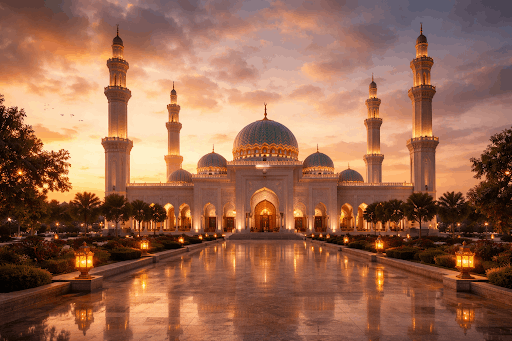
Amid the commotion of daily life there is a day that beats with a distinct rhythm—Friday. For a Muslim, it is far more than the end of the workweek. The Messenger of Allah ﷺ described it as the “mistress of all days,” more exalted even than the festivals of ‘Eid al-Fitr and ‘Eid al-Adha. It is a day of mercy, forgiveness, and a special encounter with the Creator, at the center of which stands the Friday congregational prayer—Jumu‘ah.
Its significance is affirmed in the Qur’an itself: “O you who believe! When you are called to the prayer on Friday, hasten to the remembrance of Allah and leave off trade [and worldly affairs]. That is better for you, if only you knew” (Surat al-Jumu‘ah, 62:9). This is a direct call to pause, set aside the worldly, and direct oneself toward the spiritual.
Preparation for the Encounter: More than a Ritual
Jumu‘ah does not begin in the mosque; it begins with intention in the heart and preparation of the body. This morning, it is especially recommended to perform a full ritual bath (ghusl). This is not merely a hygienic practice, but a symbolic act of inner and outer purification before an important act of worship. The Prophet ﷺ instructed: “Whoever intends to go to the Friday sermon should perform a full bath.”
In preparing to go to the mosque, the believer wears clean and dignified clothing that conforms to the norms of the Sharia, and may apply fragrance. This expresses respect for the day, for the sacred space, and for fellow worshippers. One should leave home early, with the intention of catching the first adhan and securing a place in the front rows—for each step taken toward the mosque on this day carries immense divine reward.
Who Is Obligated to Perform Jumu‘ah?
- Obligatory (fard) for: adult, sane, healthy male Muslims who are not traveling.
- Not obligatory but recommended for: women, children, travelers (according to their respective madhhab), the infirm and the sick. If they attend the mosque, Jumu‘ah counts for them in place of the midday (Dhuhr) prayer.
A Guide to the Friday Prayer: Step by Step
The structure of Jumu‘ah is orderly and full of meaning: 4 rak‘ahs of Sunnah, followed by 2 rak‘ahs of Fard, then another 4 rak‘ahs of Sunnah.
Each stage is as follows:
1. The First Four Rak‘ahs of Sunnah
After the first adhan, worshippers recite blessings upon the Prophet ﷺ and supplicate. Then, with sincere intention, each person individually performs 4 rak‘ahs of Sunnah, similar to the Sunnah of the midday (Dhuhr) prayer.
Intention (niyyah): “I intend to perform four rak‘ahs of the Sunnah of the Friday prayer, sincerely for the sake of Allah.”
2. The Khutbah (Sermon): A Time of Silence and Attention
The imam ascends the minbar and greets the congregation. The second adhan is then called, marking the beginning of one of the essential components of Jumu‘ah—the sermon (khutbah), delivered in two parts.
The first khutbah includes praise of Allah, blessings upon the Prophet ﷺ, and practical instruction derived from Qur’anic verses and Prophetic teachings relevant to the community. The imam then briefly sits, after which supplication (du‘a) is made collectively. The second khutbah is shorter and admonitory in nature.
During this time, reverent silence is required. The Prophet ﷺ sternly warned: “Whoever speaks during the Friday sermon is like a donkey carrying books.” Speaking—except in cases of necessity—deprives the individual of the blessings of that moment.
3. The Two Rak‘ahs of Fard: The Congregational Prayer
After the khutbah, the iqamah is pronounced, and the imam leads the community in the obligatory 2 rak‘ahs of prayer. These are performed similarly to the obligatory prayer of Fajr (the dawn prayer), with the imam reciting aloud.
Intention (niyyah): “I intend to perform two rak‘ahs of the obligatory Friday prayer, sincerely for the sake of Allah.”
4. The Final Four Rak‘ahs of Sunnah
Upon completion of the congregational prayer, each individual performs the final 4 rak‘ahs of Sunnah in the same manner as the initial Sunnah. Remaining seated afterward, it is recommended to join the imam in tasbihat (glorification of Allah), thus concluding the Friday prayer.
It is important to note that the Friday prayer cannot be “made up” later; if its time passes, the worshipper performs the ordinary midday prayer (Dhuhr).

Answers to Common Questions
What if one is late?
- If you join the congregation during the second rak‘ah of the fard prayer, you are considered to have caught Jumu‘ah. After the imam’s salutation, you complete the missed rak‘ah on your own.
- If you arrive after the second rak‘ah has ended, you must perform the full midday prayer of Dhuhr (4 rak‘ahs).
Should one perform Dhuhr after Jumu‘ah?
If Jumu‘ah has been performed with all its conditions fulfilled, it replaces the Dhuhr prayer entirely. There is no need to perform Dhuhr afterward.
What is most important on this day?
The essential thing is not to neglect this divine gift. The Prophet ﷺ said: “Whoever neglects the Friday prayer three times [consecutively] out of heedlessness, Allah will seal that person’s heart.” This is a severe warning that negligence in such a significant matter can harden the heart and extinguish the light of faith.
Friday is a gift, and Jumu'ah is its precious core—an opportunity each week to purify oneself, renew one’s spirit, feel the unity of the community, and strengthen one’s bond with the Creator. May every step toward the mosque on this blessed day be a step toward the pleasure of Allah.
-
 Culinary RecipesEveryone’s Favorite Pancakes: an Interesting History and a Classic Recipe
A pancake lies on your plate—modest, golden, smelling of childhood and butter. Don’t be fooled. It’s one of the oldest gastronomic t...
23 Jan 2026, 11:24 -
 ReligionHoliday Prayer (Ṣalāt al-ʿĪd) in Islam: Structure, Symbolism, Significance
There arrives that singular dawn when the air seems to vibrate with quiet joy. Cities and villages still slumber, yet in Muslim homes lights begin to...
23 Jan 2026, 08:00 -
 ReligionBeginning the Day with Worship: On the Morning Prayer
Once, at the very break of dawn, when the world stood still in anticipation of the first ray of light, the Prophet Muḥammad (peace and blessings be up...
23 Jan 2026, 06:48