



Prayer of Wahshat: A Rite of Mercy on the First Night of Solitude
In the Islamic tradition, the first night following a person’s burial is known as laylat al-wahshat—the “night of solitude” or “night of distress.” It marks the moment when the deceased, having been place...

Author

In the Islamic tradition, the first night following a person’s burial is known as laylat al-wahshat—the “night of solitude” or “night of distress.” It marks the moment when the deceased, having been placed in the grave, remains alone at the threshold of his or her otherworldly existence. According to Muslim beliefs, this night constitutes one of the most arduous trials for the deceased.
At this juncture the living are afforded an opportunity to show compassion and extend spiritual support to the departed. This support takes the form of a special voluntary prayer—ṣalāt al-wahshat. It is a two-rakʿah prayer performed with the intention that its spiritual reward be gifted to the deceased, thereby alleviating his or her condition and mitigating the sense of loneliness.
Canonical Procedure of the Prayer
The wahshat prayer is performed according to a clearly defined ritual transmitted in religious instruction.
- Formulation of Intention.
The worshipper forms the intention to perform two rakʿahs of the wahshat prayer for the sake of Almighty God, so that its reward may reach a specified deceased person. - First Rakʿah.
After the opening takbīr and the recitation of Sūrat al-Fātiḥa, one recites Āyat al-Kursī (Qur’an 2:255). This verse, conveying God’s boundless dominion, knowledge, and might, serves as a source of spiritual fortification. - Second Rakʿah.
Following Sūrat al-Fātiḥa, Sūrat al-Qadr (“Indeed, We sent it down on the Night of Decree…”) is recited ten times consecutively. The repeated recitation of this sūrah—which describes the descent of supreme divine mercy—symbolizes the channeling of an intensified stream of divine grace toward the deceased. - Concluding Supplication.
Upon completing the prayer with tashahhud and salām, the following supplication is recited:
اللَّهُمَّ صَلِّ عَلَى مُحَمَّدٍ وَ آلِ مُحَمَّدٍ وَ ابْعَثْ ثَوَابَهَا إِلَى قَبْرِ فُلَان
“Allāhumma ṣalli ʿalā Muḥammadin wa āli Muḥammad, wa-bʿath thawābahā ilā qabri [name of the deceased].”
For a man: “…ilā qabri [Name] ibn [father’s name].”
For a woman: “…ilā qabri [Name] bint [father’s name].”
A semantic rendering would be:
“O Allah, bless Muhammad and the family of Muhammad, and send the reward of this prayer to the grave of such-and-such.”
It is believed that upon acceptance of this supplication, the reward of the performed prayer reaches the deceased, bringing light and consolation into the grave.

Temporal Conditions and Practical Considerations
- Preferred Time.
The optimal time for performing ṣalāt al-wahshat is the first night after the burial, specifically following the obligatory night prayer (ʿishāʾ). This corresponds to the canonical understanding of laylat al-wahshat. - Permissible Time.
If it is not possible to perform the prayer during the first night, it remains permissible to perform it at any subsequent time after the burial. Nevertheless, primary merit is accorded to the aforementioned time frame. - Delayed Burial.
If burial cannot be carried out on the day of death (e.g., due to transportation or procedural circumstances), the wahshat prayer is not performed until after actual interment. In such cases, it is deferred and carried out on the first night following the burial.
Inter-Confessional Context
An analogous practice of offering spiritual support to the deceased during the first night is found within the Sunnī tradition as well. A Sunnī ḥadīth cited in classical sources states: “The most difficult night for the deceased is the first night after burial… perform a two-rakʿah prayer…” Although minor differences may exist regarding recommended sūrahs, the essence of the rite—performing a voluntary prayer and donating its reward to the deceased—demonstrates a shared concern across the Islamic ummah for extending mercy to those who have passed.
The wahshat prayer constitutes an act of transcendent mercy. It underscores that the relationship between the living and the dead is not abruptly severed but rather transformed. The living retain the capacity to benefit those who have entered the next world by beseeching the Most Merciful to bestow the reward of righteous acts upon them. This rite serves as both a fulfillment of the living’s obligation toward the deceased and a continuation of love and care beyond the limits of earthly existence.
-
 Culinary RecipesEveryone’s Favorite Pancakes: an Interesting History and a Classic Recipe
A pancake lies on your plate—modest, golden, smelling of childhood and butter. Don’t be fooled. It’s one of the oldest gastronomic t...
23 Jan 2026, 11:24 -
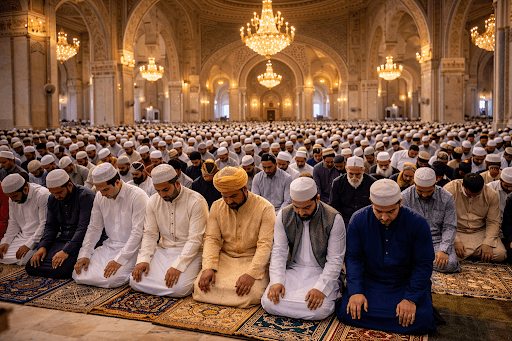 ReligionHoliday Prayer (Ṣalāt al-ʿĪd) in Islam: Structure, Symbolism, Significance
There arrives that singular dawn when the air seems to vibrate with quiet joy. Cities and villages still slumber, yet in Muslim homes lights begin to...
23 Jan 2026, 08:00 -
 ReligionBeginning the Day with Worship: On the Morning Prayer
Once, at the very break of dawn, when the world stood still in anticipation of the first ray of light, the Prophet Muḥammad (peace and blessings be up...
23 Jan 2026, 06:48