



How to Stop Being a Zombie: The Science of Quality Sleep
At night, your brain behaves like that one friend who wakes you up to announce a “brilliant” idea. It is time to put an end to this. You know this person well. At three in the morning, they suddenly devise a plan to save the wor...

Author
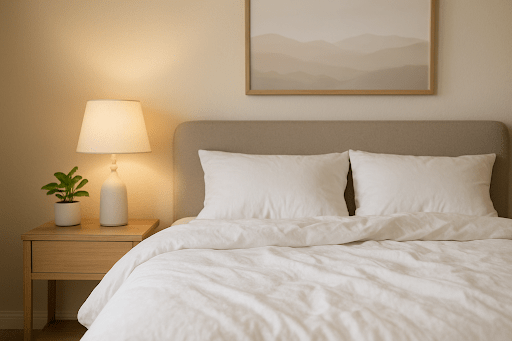
At night, your brain behaves like that one friend who wakes you up to announce a “brilliant” idea. It is time to put an end to this.
You know this person well. At three in the morning, they suddenly devise a plan to save the world; at seven, when the alarm rings, they are completely offline. Congratulations—you and that person are one and the same. Your own brain is the chief saboteur of your rest. While you are trying to shut down, it launches a full-scale festival of mental noise: from “What exactly did I say to that person in 2015?” to “Do penguins actually feel cold?”
We are engaged in a kind of guerrilla war with ourselves. And it is time to start winning.
Micro-stories from the future, where you finally get enough sleep
Story No. 1: turkey is not only about Thanksgiving. It is about tryptophan—a compound that gently takes your brain offline with the same pleasure with which you yourself disconnect on a Friday evening.
Story No. 2: one cup of coffee at 6 p.m. is a silent thief that steals about 20% of your deep sleep. It is like paying for a movie ticket and then sleeping through the best scene.
Story No. 3: falling asleep on your back is not merely striking a vampire-in-a-coffin pose. You are giving your spine a chance at a life without morning curses.
Story No. 4: your bed is not an office, not a movie theater, and not a branch office of social media. It is an altar of sleep. It is time to stop eating cookies there and watching trash streams.
So, you decided to sleep well. What went wrong?
You think sleep is simply a matter of “lying down and closing your eyes.” Naïve. Sleep is an extraordinarily complex negotiation between your exhausted body and a brain that suddenly remembers it is Julius Caesar and must simultaneously govern an entire empire of thoughts.
Australian researchers have recently clarified the core of the problem: in people with insomnia, the internal clock is disrupted. Their brains do not receive a clear signal to “power down” at night and instead maintain a state of active thinking well past midnight. This is not your fault; it is a circadian malfunction. But it is your responsibility to fix it.
A curious number: during eight hours of sleep, your body quietly burns about 500 kcal. Not through punishing exercise, but through a silent, almost magical act of weight regulation. The paradox is this: if you are sleep-deprived, your body will demand those calories back the next day—with interest—preferably in the form of something fatty and sweet. Why? Because lack of sleep raises ghrelin (the hunger hormone) and suppresses leptin (the satiety hormone). A brain deprived of energy takes the path of least resistance.

Now to the main characters of our story: food—your best friend or your worst enemy after midnight
Dinner: crime fiction before bedtime
Imagine your stomach as a nightclub. Cold, heavy food is a crowd of drunk patrons starting a fight at four in the morning. They disturb everyone: the bouncer (the liver), the DJ (the brain), and security (the heart). Gastroenterologists agree unanimously: dinner should be light, warm, and balanced.
Here is what to eat if you want to shut down as if by flipping a switch:
- Turkey / Eggs: these are not just foods; they are deposits of tryptophan—the amino acid from which the body produces serotonin and melatonin, the “pajamas for your brain.” A natural sleeping aid with only one side effect: an overwhelming desire to hug your pillow.
- Almonds / Cherries: almonds are rich in magnesium, a natural muscle relaxant. Cherries are among the few foods that contain ready-made melatonin. A handful of nuts or berries is like pressing the “Quiet!” button on your internal noise festival.
- Spinach: high in calcium, which helps the brain convert tryptophan into melatonin. Spinach at dinner is like a discreet assistant handing over the right tools to repair your biological clock.
And now—the stop list, the enemies under the blanket:
- Caffeine after 3 p.m.: that guest who should have left the party long ago but still stands in the doorway telling jokes. Even one cup six hours before sleep reduces deep sleep by 15–20%. You may sleep, but you will not recover.
- Sugar and fast carbohydrates: they provoke a spike in cortisol, the stress hormone. The body thinks it is time to run from a cheetah, not to sleep peacefully. No cakes, unless you want your brain to stage a nocturnal panic marathon.
- Alcohol: the great deceiver. Yes, it makes you drowsy. But its metabolism wakes you in the middle of the night, destroying deep sleep stages. The morning after a glass of wine is always a fraud: you slept, yet feel as if you were unloading freight cars.
Posture: the art of lying correctly
Sleeping on your stomach is a suicidal posture for your back and neck. You are literally strangling yourself, turning your head ninety degrees to the side. Neurologists and manual therapists sound the alarm: the best position is on your back. It is neutral for the spine, the neck is relaxed, and the organs are not compressed.
Sleeping on your left side earns an honorable second place. It improves lymphatic drainage and digestion. The fetal position, however, is a sign that even in bed you are trying to hide from your problems. Straighten up—your spine will thank you.
Rituals
Your brain cannot simply switch off. It needs a ritual—civilized “negotiations of surrender.”
- Keep a sleep diary. Not a diary of feelings, but intelligence reports on the enemy. Record when you went to bed, how long it took to fall asleep, and how often you woke up. After a week, patterns will emerge, and you will identify your main saboteur.
- Eliminate blue light. One hour before bed—no screens. Light from a phone is, for the brain, like a searchlight in the face accompanied by a shout: “WAKE UP! THE DAY HAS STARTED!” Reading a paper book is your peaceful shield.
- Darkness and coolness. The ideal sleeping temperature is 18–20°C (64–68°F). In a stuffy room, the body spends energy cooling itself instead of resting. Darkness must be absolute. No LEDs from chargers—they are like tiny devils poking you with pitchforks. Earplugs and a sleep mask are your elite special forces.
- The bed is only for sleep. Do not turn your altar of rest into a branch office, a cinema, or a courtroom. The brain must associate the bed with a single action. Only then will it receive a clear signal: “Work is not valued here.”
- 4–7–8 breathing. When anxious thoughts attack, deploy heavy artillery. Inhale for 4 counts, hold for 7, exhale for 8. This is a reboot for your nervous system, shifting it from “fight or flight” to “rest and digest.”

The bedroom as a sanctuary: your personal co-working space for sleep
Your sleeping environment should announce calm, not chaos.
- Mattress and pillow: this is your throne. Choose a mattress that supports rather than collapses. The pillow should not merely be soft, but should keep the neck in a neutral position. Sleeping on the wrong pillow is like walking all day with a twisted neck—no heroism, only pain.
- Bedding matters. breathable cotton or silk instead of synthetics that make you sweat at three in the morning is not luxury; it is hygiene.
- Silence and order. clutter in the room is clutter in the mind. Tidy up. Air the room. Create a cave, not a warehouse.
The irony is that we are willing to spend money on superfoods, fitness trainers, and expensive gadgets, yet we are stingy with the simplest and most free medicine of all: high-quality sleep.
Your morning self is the most important person you know. How you treat yourself at night determines whether you meet that person alert and clear-eyed—or as a zombie cursing all living things.
Choose the first option.
It is infinitely more pleasant.
-
 Culinary RecipesEveryone’s Favorite Pancakes: an Interesting History and a Classic Recipe
A pancake lies on your plate—modest, golden, smelling of childhood and butter. Don’t be fooled. It’s one of the oldest gastronomic t...
23 Jan 2026, 11:24 -
 ReligionHoliday Prayer (Ṣalāt al-ʿĪd) in Islam: Structure, Symbolism, Significance
There arrives that singular dawn when the air seems to vibrate with quiet joy. Cities and villages still slumber, yet in Muslim homes lights begin to...
23 Jan 2026, 08:00 -
 ReligionBeginning the Day with Worship: On the Morning Prayer
Once, at the very break of dawn, when the world stood still in anticipation of the first ray of light, the Prophet Muḥammad (peace and blessings be up...
23 Jan 2026, 06:48