



Shah Ismail I: Statesman and Poet of His Time
Spoiler: this will change your view of “boring history.”Shah, poet, and brand—all in one.If you think historical figures are nothing more than dry dates, then you have not yet encountered him.He lost one battle—but w...

Author
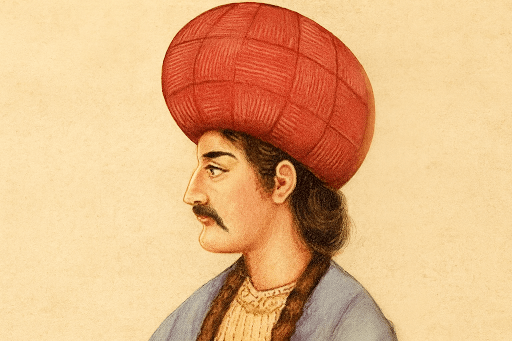
Spoiler: this will change your view of “boring history.”
Shah, poet, and brand—all in one.
If you think historical figures are nothing more than dry dates, then you have not yet encountered him.
He lost one battle—but won eternity and left an indelible mark on the history of Azerbaijan.
Entry into the Game: How a Teenager Became Shah
Ismail was born in 1487 in Ardabil, into a family in which politics, religion, and symbols of power were intertwined more tightly than silk threads in a sash. His father was killed when the boy was still very young; what followed were years of confinement—an ordeal after which some break, but not Ismail.
Already in his teenage years, Ismail began to gather people around himself—and, more importantly, an idea. Within a few swift years, his movement transformed into a force capable of redrawing the map of the world. In 1501, he entered Tabriz and crowned himself shah. Thus began a new era and a new dynasty.
Insight: people followed him not out of fear.
Charisma + idea = an army.
The Brand Called the “Qizilbash”
The red headgear with twelve folds became the marker of an entire epoch. It was not an accessory; it was a code of faith and belonging. His movement was not an “army by command”—it was a community inspired by the religious, political, and emotional meaning he provided.
One may study military history endlessly, but sometimes the explanation is simpler: he gave people a reason to march. And they marched.
Sword and Word: Why Language Matters More Than the Saber
In an era when “high style” was considered the exclusive domain of Persian, Ismail made the Turkic (Azerbaijani) language the language of the court, of power, and of literature. This was a strategic decision, not a romantic gesture. Language became a bridge between authority and the people.
At the same time, under the pen name Khatai, he composed poetry in his native Azerbaijani as well as in Persian. These were not ornate or arrogant verses, but living, accessible, mystical poems filled with emotion. Poetry was his means of speaking directly to the people.
It is known that Khatai also wrote poetry in Arabic; however, it was precisely the works created in his native language that defined his artistic stature and influence. Poetry close to the spirit of the people and nourished by popular modes of thought became widely known already during his lifetime. The popularity of Ismail Khatai’s poetry quickly transcended the borders of his homeland and spread throughout the Turkic world.
In Khatai’s poetic legacy one finds not only political views, but also a broad social and philosophical worldview, as well as motifs of struggle for the ideals and convictions of his time. Much of his religious and political poetry was composed in folk forms—using a clear, simple, living language that was understandable and close to a wide audience.
Chaldiran: A Defeat That Became Part of the Legend
The year is 1514.
The plain of Chaldiran.
On one side—the Safavids.
On the other—the Ottoman Empire of Selim I Yavuz.
A clash of giants.
For the first time, Ismail confronted something against which even the most brilliant cavalry was powerless: artillery. The Safavids were defeated. Yet it was here that one of the most powerful legends of the age was born—the strike of a sword against an Ottoman cannon and the words:
“The sword is the same sword, but the arm is no longer the same.”
Not a complaint. Not bitterness. Rather, an ironic awareness of his own singularity.
This defeat did not destroy his influence—on the contrary, it illuminated the limits of military force and opened the way to a cultural strategy.
Insight: sometimes blood on the battlefield gives way to the power of memory.

After the Battle: Fewer Campaigns, More State-Building
After Chaldiran, Ismail withdrew from endless warfare and focused on the internal architecture of the state. This was a turning point:
- language → an instrument of identity,
- judicial practice → stability,
- religious institutions → support,
- culture → long-term policy.
The empire rested not on sabers—it rested on meanings.
The Safavids and the Ottomans were two Turkic powers locked in conflict. Historians sometimes call these “fraternal” wars—but fraternal wounds hurt more deeply.
Even today, the figure of Khatai can provoke controversy:
for some, he is a symbol of a national idea;
for others, a dangerous figure.
History is never unambiguous—and therein lies its honesty.
A Poet on the Throne: Why a Monarch Needs Poetry
For Ismail, poetry was not ornamentation; it was an instrument.
He explained power through emotion rather than command.
He spoke a language understood by both nobles and shepherds.
Words create myth.
And myth creates the state.
A Legacy That Still Functions
He died young, yet everything he built endured for centuries:
documents are being recovered,
museum exhibitions continue to expand,
his verses are quoted,
music preserves his image.
His era is not closed. It is alive.
How to Read Khatai Today
Not as a saint.
Not as a villain.
But as a phenomenon: a charismatic leader, a poet, a creator of the language of power, a strategist of culture, a man who understood that the sword and the pen work only together.
He lived quickly, thought deeply, and wrote in a way that ensured he would be remembered. His story is a reminder that power rests not only on force, but also on the word.
-
 Culinary RecipesEveryone’s Favorite Pancakes: an Interesting History and a Classic Recipe
A pancake lies on your plate—modest, golden, smelling of childhood and butter. Don’t be fooled. It’s one of the oldest gastronomic t...
23 Jan 2026, 11:24 -
 ReligionHoliday Prayer (Ṣalāt al-ʿĪd) in Islam: Structure, Symbolism, Significance
There arrives that singular dawn when the air seems to vibrate with quiet joy. Cities and villages still slumber, yet in Muslim homes lights begin to...
23 Jan 2026, 08:00 -
 ReligionBeginning the Day with Worship: On the Morning Prayer
Once, at the very break of dawn, when the world stood still in anticipation of the first ray of light, the Prophet Muḥammad (peace and blessings be up...
23 Jan 2026, 06:48