



Which District of Baku to Stay In: A Simple Guide for the Thoughtful Traveler
Baku is a city of winds—and of gradual revelation. It does not present itself all at once. At first, it dazzles with polished façades, shimmering glass, and luxury signage, as if proudly displaying its glossy surface. Take one...

Author
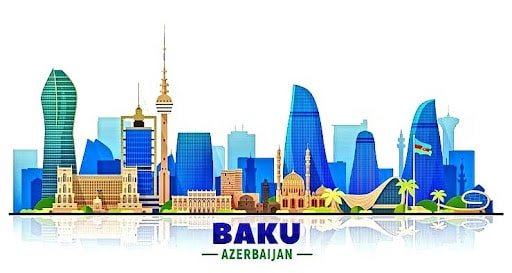
Baku is a city of winds—and of gradual revelation. It does not present itself all at once. At first, it dazzles with polished façades, shimmering glass, and luxury signage, as if proudly displaying its glossy surface. Take one wrong turn, however, and you find yourself in another century: stone walls radiate warmth, spices drift from narrow courtyards, and the sea can be heard somewhere between the houses.
Go further still—deeper—and the city suddenly becomes personal. People smile at you, offer you hot baklava “just out of the oven,” and before you realize it, you no longer feel like a tourist but like a guest.
That is why a district in Baku is not merely a point on a map. It is a mood, an atmosphere, a history you choose to inhabit.
Below is a guide to where to stay in Baku—written for those who have no desire to flip through tedious guidebooks.
For the impatient: quick spoilers
- Want selfies with 12th-century stone walls and are willing to pay for the privilege? Icherisheher or Sabail is your choice.
- Dream of shopping, cafés, and a “walk-everywhere” lifestyle? Nasimi District awaits.
- Looking for quiet streets, parks, a lake, and prices that don’t make your eye twitch? Consider Yasamal.
- Want to catch the city in the midst of its metamorphosis from “Black” to “White”? Head to White City and witness a construction project of the century.
- Planning not just to visit, but to invest? Then your districts are Nasimi, Sabail, White City, Badamdar, and Khatai—places where foreign capital has long felt at home.
Icherisheher: when you feel the need to embrace a 12th-century wall
You pass through the fortress gate, and 21st-century Baku—with its glass and concrete—remains outside. Cars technically exist here, but navigating these streets without losing a side mirror is a minor quest. You walk on cobblestones once trodden by merchants of the Great Silk Road, while laundry dries on lines above your head. A paradox? Yes. Atmosphere? Absolute.
This is where you will find the Maiden Tower and the Palace of the Shirvanshahs. Yet the true attraction is the labyrinth itself. Getting lost is part of the experience. One turn brings you to a carpet shop, another to a workshop where copper jugs are still hammered by hand.
An insider’s note: looking for accommodation inside the Old City is like looking for budget caviar—possible, but unlikely. Options do exist, but they are mostly luxury hotels or apartments priced as if you were ransoming the very caravanserai you admire. Hostels here are as extinct as dinosaurs. If you crave authenticity without selling a kidney, look just outside the fortress walls.
Nasimi District: for those who love the city the way others love a good shopping mall
Named after a poet, yet governed by the laws of commerce, this is Baku for those who understand leisure as a smooth transition from boutique to café, from café to restaurant, from restaurant to park. Infrastructure here winks at you from every corner.
The northern part of the district features neat pedestrian streets, fountains, and meticulously polished new buildings. The southern part is a mix of Soviet-era architecture and almost village-like courtyards, where everyone knows everyone else.
This is an ideal base if you do not want to depend on transport. Icherisheher is within easy reach; parks, the zoo, and shopping malls are all close by. The district is not cheap, but with some effort, reasonable options can be found. And if your budget is singing the blues, look toward neighboring Narimanov District—prices there are lower, while the trip to the center still takes about 20 minutes. Incidentally, 20 minutes in a taxi is roughly how long you might spend searching for a free table in a popular Nasimi café.
Yasamal: ecology, tranquility, and the philosophy of “nothing much happens”
While central Baku melts under August heat and noise, in Yasamal you can almost hear grass growing—almost. This is a refuge district. People come here not for adrenaline, but to exhale. Historical landmarks: none. Architectural masterpieces: very few. What it does offer is a park, a lake, comparatively clean air (by environmental assessments, one of the city’s most favorable districts), and the feeling of being on the outskirts—despite the historic center beginning just nearby.
There are no ostentatious restaurants here, but there are cozy cafés and small shops selling everything essential. It is paradise for families with children and for introverts exhausted by the urban circus. Housing prices are pleasantly moderate, especially compared with neighboring Sabail. A warning, however: if your ideal evening involves choosing between the latest trendy bar and an art gallery, boredom may set in by day two. Yasamal’s charm lies in its unhurried pace and quiet, almost domestic hospitality.
Where the air feels easier to breathe (according to environmental specialists):
According to the National Hydrometeorological Service, the most environmentally favorable districts of Baku are Pirallahi, Binagadi, Yasamal, and the 9th microdistrict. If clean air is a genuine priority for you, take note.
Sabail District: the heart that beats for the tourist
If Baku had a tourist ego, it would live here. This is the geography of must-see attractions. The Maiden Tower? Of course. The Seaside Boulevard? Right here, stretching for kilometers. The Carpet Museum shaped like a rolled carpet? Exactly here. “Little Venice” with its boats? Yes—pure nostalgia for a Soviet resort.
Sabail is a district where you can spend your entire holiday without going anywhere else. Everything is here: from a free funicular to Highland Park with views of the Flame Towers, from high-end restaurants to modest street food. It is convenience taken to an extreme. Book a hotel here and forget about transport—everything that matters is within walking distance.
There is, however, a caveat. The closer you are to the center, the higher the prices and the denser the tourist crowds. Move toward the edges of Sabail, and you are more likely to encounter construction sites or spot a solitary oil derrick on the horizon—a reminder that this glamorous façade grew out of oil fields. Baku does not shy away from its past.
White City: quite literally, from rags to riches
The city’s boldest transformation. Once the “Black City,” with oil derricks, sulfurous smells, and the Nobel brothers overseeing their empire from Villa Petrolea, this area is now a flagship project aimed at turning industrial wasteland into a district of the future.
Everything here smells new: buildings, roads, parks—and endless construction. This is an adolescent district: long legs, vast potential, but underdeveloped social skills. Cafés and shops are scarce. Street life is minimal. What you do get is the feeling of living inside an architectural magazine.
Accommodation for tourists is still something of a quest. Hotels are appearing, apartments are being rented out, but mass availability has not yet arrived. This is a choice for pioneers—for those who want to say, “I was there when it all began.” Ideal for photographers, urbanists, and lovers of concrete aesthetics. Come here not for coziness, but to witness a metamorphosis in progress.
And where does your money prefer to live?
If you are reading this not as a tourist but as an investor—choosing an apartment not for suitcases but for capital—the map changes. Foreign money is discerning and tends to settle in specific places.
- Central districts (Nasimi, Sabail, Yasamal): the classics. Liquidity, steady tourist rental demand, stable growth. Like a gold bar—only in square meters.
- White City: an ambitious startup. You are buying not just property, but faith in the district becoming Baku’s new face. The risk is higher, but so is potential return.
- Badamdar, Bayil: prestigious periphery. Sea views, villas, cleaner air. An investment in status and long-term perspective.
- Khatai, Narimanov: reliable workhorses. Developed infrastructure, relative affordability, strong demand for long-term rentals. Not glamorous, but dependable.
Baku is not chosen by ticking off attractions. It is chosen by its pulse. Where do you want to wake up: to the hum of engines downtown, or to birdsong in a park? Do you want to stand at the epicenter of history, or observe how modernity weaves its own narrative? Answer that question, and the district will find you. Sooner or later, the capital of Azerbaijan will reveal precisely the layer you are looking for.
-
 Culinary RecipesEveryone’s Favorite Pancakes: an Interesting History and a Classic Recipe
A pancake lies on your plate—modest, golden, smelling of childhood and butter. Don’t be fooled. It’s one of the oldest gastronomic t...
23 Jan 2026, 11:24 -
 ReligionHoliday Prayer (Ṣalāt al-ʿĪd) in Islam: Structure, Symbolism, Significance
There arrives that singular dawn when the air seems to vibrate with quiet joy. Cities and villages still slumber, yet in Muslim homes lights begin to...
23 Jan 2026, 08:00 -
 ReligionBeginning the Day with Worship: On the Morning Prayer
Once, at the very break of dawn, when the world stood still in anticipation of the first ray of light, the Prophet Muḥammad (peace and blessings be up...
23 Jan 2026, 06:48