


Bento Cakes: From the Japanese Lunch Box to a Global Trend
You might think it is simply a cake. You would be mistaken. It is a personal message written in buttercream, a parcel of endorphins in a kraft box, and a silent witness to how the pandemic taught us to celebrate alone—yet with remarka...

Author
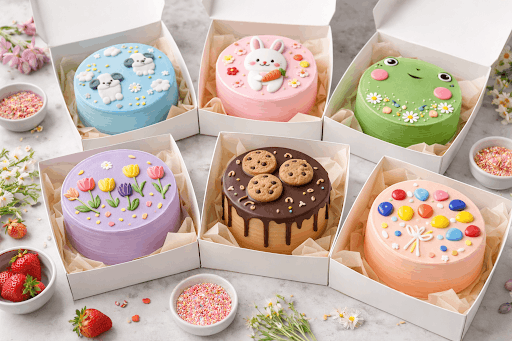
You might think it is simply a cake. You would be mistaken. It is a personal message written in buttercream, a parcel of endorphins in a kraft box, and a silent witness to how the pandemic taught us to celebrate alone—yet with remarkable style.
Spoiler for the impatient: the bento cake is not about food, but about emotion. The term is Japanese, the invention is Korean, and the trend is global—arriving with every intention of staying. It weighs roughly as much as a can of preserves (about 400 grams) and can sometimes cost as much as a full-sized two-kilogram cake. And yes, one can eat it alone without a hint of guilt, because it was created precisely for that purpose.
From Rice Lunch Box to Edible Greeting Card: A Journey Across Centuries
12th century Japan: a wooden box filled neatly with rice for a long journey. This is the proto-bento—practical, aesthetic, and individualized. The word “bento” is Japanese and denotes a packed portion of food. Bento culture evolved over centuries, from boxes taken to flower viewings to children’s school lunches. And then it resurfaced—unexpectedly—in Korea, albeit filled with something entirely different.
Koreans—unquestionably among the leading trendsetters of contemporary Asia—took the concept and reimagined it radically. While the Japanese placed rice and fish in their bento, it was in 2020, at the height of global lockdowns, that South Korea had the ingenious idea to place a celebration inside it: a cake. A small, individual cake, to be precise. They named it the saeng-il cake—a “birthday cake.”
The idea was ingenious in its elegant simplicity. No parties? No problem. A miniature cake bearing a heartfelt inscription could be delivered to a friend as a virtual embrace, or purchased for oneself to punctuate gray days with a private celebration. The concept proved so resonant, so timely, that it outlived quarantine and continues its triumphant march across the world.
A micro-anecdote from a pastry chef:
“People call and say: ‘I need a cake, but there are only two of us.’ Before, they would order a slice. Now they order a bento. It’s a different psychological level. It’s a cake that belongs solely to you. You don’t need to share it. It is like a personal compliment baked into a sponge.”

What Makes It Special?
Let us examine it layer by layer.
Size matters—and here, small is the point.
Diameter: 10–12 cm.
Weight: 300–500 g (occasionally up to 600).
This is not a slice; it is an entire cake that belongs to you. It requires no cutting. You open the box, detach the spoon fixed to the lid, and descend into your own private confectionery bliss.
Packaging is half the magic.
Typically a stylish kraft box made of cardboard or sugarcane fiber, lined with parchment. On the lid one might find a disposable spoon or fork—sometimes even a small candle. This is a complete product, ready for gifting and immediate consumption anywhere: in a park, in an office, on a balcony.
Decoration: minimalism, irony, and soul.
Buttercream reigns supreme. No fondant fortresses or tooth-aching sugar roses. A perfectly smooth surface (or deliberately casual palette-knife strokes) becomes a canvas for concise yet poignant inscriptions: “Happy Birthday,” “Love You,” “You’re a cat, I’m a cat,” “Retirement is near,” or even a favorite meme. This is a cake-postcard, a cake-confession, a cake-joke.
Inside, the seriousness begins.
Do not be deceived by the size. Inside is a fully realized dessert: tender sponges (vanilla, chocolate, red velvet), high-quality creams (cream cheese, whipped cream, buttercream), and fillings of berry confiture, caramel, or nuts. Flavor combinations range from the classic “Chocolate–Cherry” to the refined “Pistachio–Raspberry.”
The price paradox: a tiny cake that costs like a large one.
The explanation is simple. Baking and assembly require nearly the same amount of time. The design is always handmade. The ingredients are premium. And the packaging adds to the cost. One pays not for volume, but for concentration—of labor, thought, and emotion.
For Whom and for What Occasion?
Large cakes imply obligations: guests, planning, excess calories for an entire week. Bento cakes imply freedom. They are about you—or the one person you want to delight.
Suitable for:
- Birthdays — especially those falling on weekdays or celebrated intimately.
- Declarations of love — more romantic than flowers; “I love you” written in cream surpasses any card.
- Anniversaries — not only wedding anniversaries; one may celebrate a month of dating or “1000 days together.”
- Achievements and simple joys — a promotion, a child’s exam, the return of sunshine.
- Comforting a friend — after a quarrel or on a melancholic day.
- Monthly baby milestones — a fashionable alternative to large cakes inevitably eaten by parents.

DIY: A Recipe as Performance
Attempt it if you dare. Making a bento cake at home is akin to assembling advanced Lego: meditative and demanding precision.
Sponge: usually classic or chocolate. Bake on a baking sheet, then cut out 10-cm rounds. Do not over-bake.
Cream: the gold standard is cream cheese frosting—stable, not overly sweet, excellent for smoothing.
300 g cream cheese + 100 g butter + 100 g powdered sugar, whipped until silky.
Assembly and smoothing:
Soak the sponges with syrup. Build the cake, piping a ring of cream to hold the filling (berry confiture, ideally). Then smooth the exterior. A chilled cake, a spatula dipped in hot water, and your pursuit of a flawless finish. The first layer catches crumbs; the second is the final coat.
Decoration:
This is the artistic phase. A piping bag with a fine tip, a bit of gel-tinted cream, and onward: a phrase, a dot, a heart, a wavy border. If writing feels daunting, use a stencil, edible print, or simply adorn with berries or piped flowers.
Packaging:
Without the signature box, it is merely a small cake. In the box, it becomes a bento: parchment, ribbon, spoon attached to the lid. Ready!
The Conclusion—In Bento Style: Brief, Precise, To the Point
The bento cake is not just a confectionery trend. It is a new philosophy of celebration—one of intimacy, personal attention, and mindful delight. It demonstrates that joy is not measured in kilograms of sugar and butter, but in precision of emotional resonance.
It is the antithesis of gigantism: the triumph of minimalism and maximalist feeling at once. Its price rivals that of a large cake because its value lies not in flour and eggs, but in an idea—an idea that traveled across centuries to become the perfect gift in an era when the greatest luxury is attention directed to a single, specific person.
-
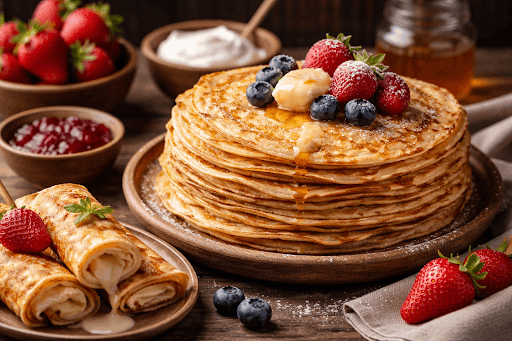 Culinary RecipesEveryone’s Favorite Pancakes: an Interesting History and a Classic Recipe
A pancake lies on your plate—modest, golden, smelling of childhood and butter. Don’t be fooled. It’s one of the oldest gastronomic t...
23 Jan 2026, 11:24 -
 ReligionHoliday Prayer (Ṣalāt al-ʿĪd) in Islam: Structure, Symbolism, Significance
There arrives that singular dawn when the air seems to vibrate with quiet joy. Cities and villages still slumber, yet in Muslim homes lights begin to...
23 Jan 2026, 08:00 -
 ReligionBeginning the Day with Worship: On the Morning Prayer
Once, at the very break of dawn, when the world stood still in anticipation of the first ray of light, the Prophet Muḥammad (peace and blessings be up...
23 Jan 2026, 06:48